Divert & Attitude Control Systems

Overview

L3Harris is the industry leader in Divert and Attitude Control System (DACS) technology—delivering the precision, agility, and reliability missile interceptors need to defend against advanced threats across both exo- and endo-atmospheric environments. From liquid-fueled to solid-propellant systems, our DACS solutions guide interceptors with unmatched maneuverability, enabling hit-to-kill accuracy at the edge of space.

Key Features

DACS enable interceptors and spacecraft to change orientation or trajectory mid-flight. In missile defense, DACS equips the kill vehicle agility to fine-tune its course and collide with targets—a necessity for successful hit-to-kill intercepts against high-speed or maneuvering threats. As threats evolve, like hypersonic glide vehicles and advanced cruise missiles, DACS technology becomes more vital, delivering the maneuverability needed to counter unpredictability and achieve lethal intercepts.

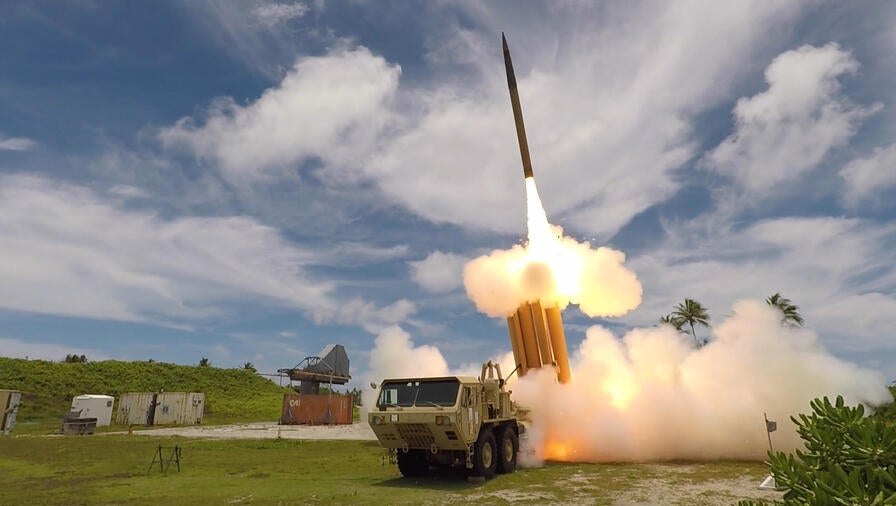
In addition to its solid rocket motor, L3Harris supplies the Liquid Divert and Attitude Control System (LDACS) for THAAD. LDACS is a high-precision, quick-reaction propulsion system that positions the interceptor to successfully defeat an incoming ballistic missile. The unique DACS provides two kinds of propulsion: one for attitude control and another for kill-vehicle maneuvering. The DACS uses six thrusters to provide roll, pitch and yaw control for the interceptor. These thrusters work together to precisely stabilize the interceptor-seeker field of view for proper target visibility. The seeker's target data are then converted into maneuvering or divert commands that actuate the other four DACS thrusters as required. The four divert thrusters provide short, forceful pulses to quickly and accurately position the THAAD kill vehicle for target intercept. The DACS performs over a demanding range of temperatures, shock and vibration-flight environments.

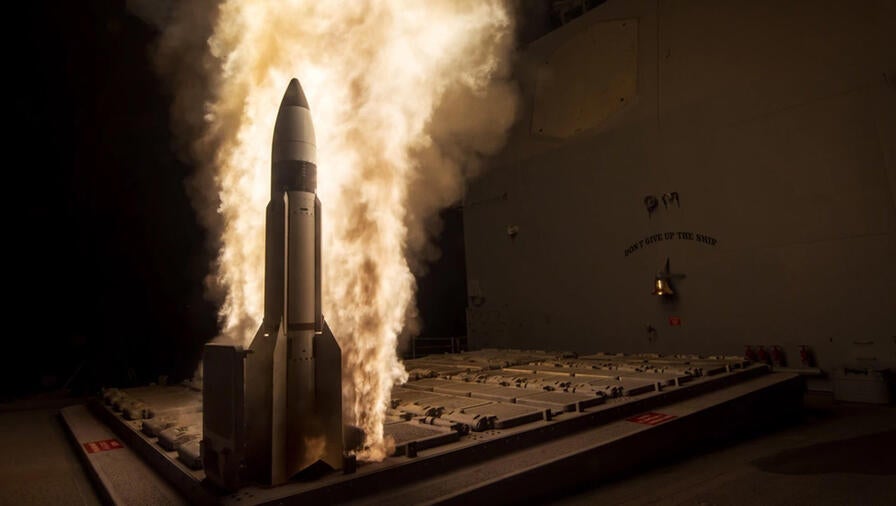
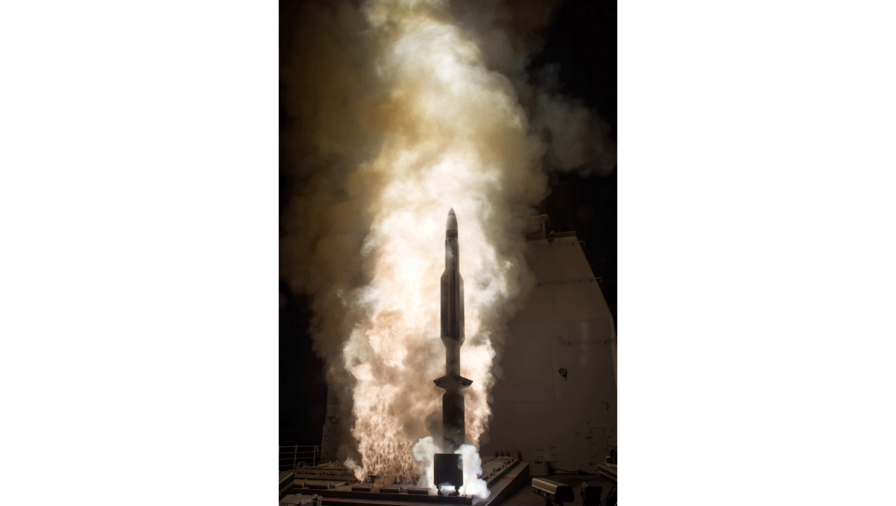
L3Harris' Throttling Divert and Attitude Control System (TDACS) helps maneuver the kinetic warhead of the SM-3 into the target for the final hit-to-kill impact. L3Harris incorporates throttling solid rocket technology advancements into the TDACS design to provide increased mission flexibility to the warfighter while maintaining the safety features of solid propellant.


The appearance of U.S. Department of War visual information does not imply or constitute DOW endorsement.

Related News

Soldiers load mortar

Editorial | 03. 24. 2026

Delivering Victory Through Fuzing Precision and Scale

We're answering that call to industry by expanding capacity to produce combat-proven solutions at the speed and scale the Department of War demands. writes Jeff Zotti, Vice President and General Manager, Missile Production Programs, L3Harris.

Soldiers load mortar

Editorial | 03. 24. 2026

Delivering Victory Through Fuzing Precision and Scale

An auxiliary target has been affixed to the Interim Cryogenic Propulsion Stage

Editorial | 03. 23. 2026

RL10 and Orion Main Engine are Key to NASA’s Historic Artemis II Journey to the Moon

Photo Credit: Northrop Grumman Corporation. Precision-guided munitions shown in production illustrate one of many operational systems benefiting from modernized M-Code GPS, supporting assured positioning, navigation and timing in contested environments.

Editorial | 03. 16. 2026

L3Harris Military GPS Receiver Deliveries Surpass 100,000 Units

Dr. Robert H. Goddard and a liquid oxygen-gasoline rocket in the frame from which it was fired on March 16, 1926, at Auburn, Massachusetts. Credit: NASA

Editorial | 03. 16. 2026

L3Harris Carries Goddard’s Legacy Into a New Era

Launched effect connects with other assets as it flies over water toward land

Press release | 03. 11. 2026

L3Harris and Shield AI Achieve Breakthrough in Autonomous Electronic Warfare

Related capabilities

THAAD

Terminal High Altitude Area Defense (THAAD)

Related Domains & Industries

Solutions that solve our customers' toughest challenges.
view all capabilities