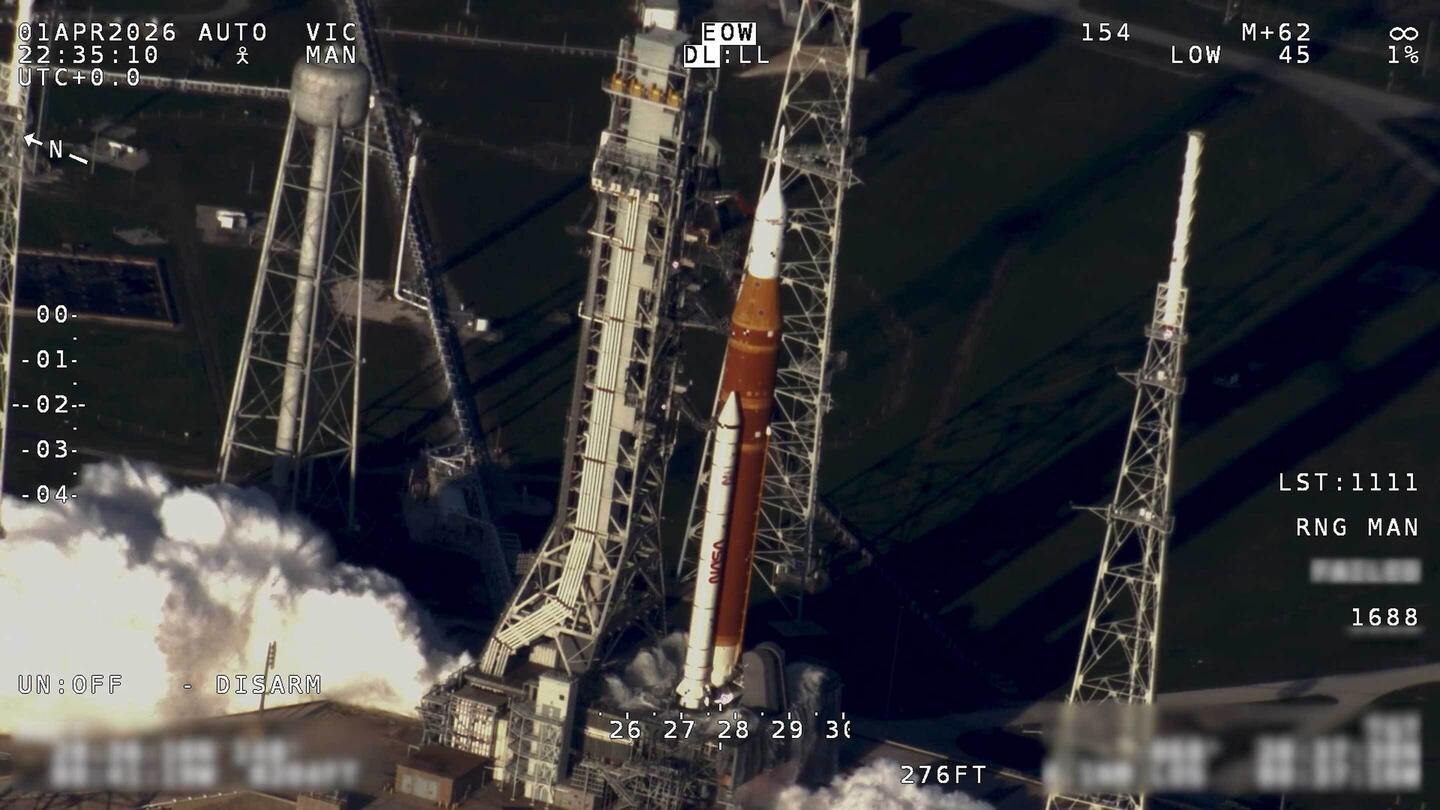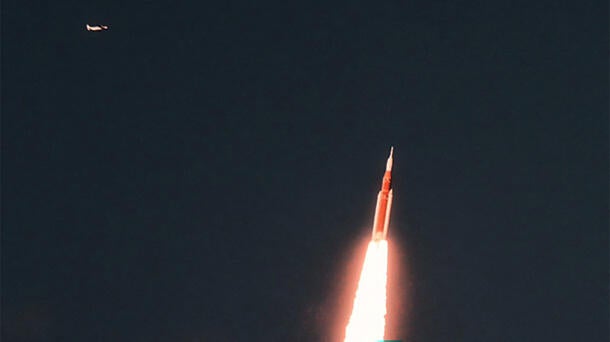
When NASA’s Artemis II crew vehicle returned to Earth, there was no margin for improvisation. The trajectory is fixed, the timeline unforgiving and the critical events, such as heat soaked reentry, parachute deployments and splashdown, only happened once. Supporting that moment, for Artemis II and other missions, requires more than technology. It demands disciplined planning, exact geometry and a crew capable of executing under pressure.
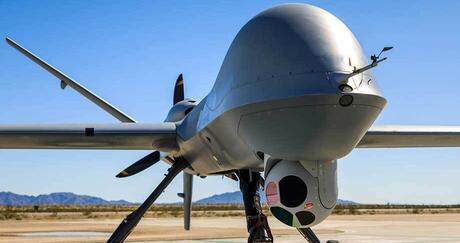
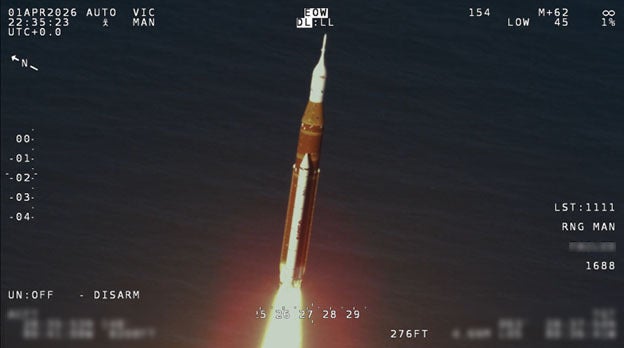
For Artemis II, L3Harris provided specialized airborne imaging support using WESCAM MX-Series electro optical/infrared systems and a highly specialized team of pilots and operators. Together, they delivered real time and post mission imagery that plays a direct role in future mission safety, engineering analysis and astronaut recovery.
Mission Planning Starts Long Before Launch
NASA typically provides planned mission attempt dates roughly a month in advance. That notification marks the beginning of L3Harris’ planning cycle, which immediately settles into a daily operational rhythm. Weather trends are monitored continuously, aircraft logistics and crew movements are coordinated and sensor integration requirements are evaluated to ensure the imaging system aligns with NASA’s operational needs.
About one to one and a half weeks before the first recovery attempt, the mission sharpens. Trajectory data, formation details and target area maps begin to arrive. At the same time, recurring coordination meetings begin with NASA and other agencies and partners. These sessions focus on aligning airborne and surface assets, defining altitude deconfliction, establishing radio communications and synchronizing timelines down to the minute.
Using this information, the flight team builds detailed entry and exit plans for the mission area and designs inbound flight tracks that satisfy NASA’s imagery requirements while respecting airspace constraints. By the time the aircraft leaves the ground, the outcome has already been engineered through repetition, validation and alignment across teams.
Precision Geometry and Technical Execution
The technical demands of recovery imagery are high and exacting. The aircraft, operates around a circular keep out zone roughly five kilometers from the planned splashdown point. The inbound flight track is designed perpendicular to the capsule’s return trajectory, a geometry selected to maximize sensor angles during the most critical phases of descent.
The aircraft normally arrives two days early so NASA specific equipment can be installed and fully integrated. Once installation is complete, a dedicated test flight confirms sensor functionality and validates the datalink used to offboard live WESCAM MX-Series video. This step is essential. Imagery is only useful if it reaches decision makers in real time.
On mission day, the crew departs early enough to be on station approximately 45 minutes before splashdown. That buffer allows pilots to account for winds aloft, which often require real time changes to headings and airspeeds and continual refinement of the planned geometry.
As the capsule descends, MWIR typically becomes the primary acquisition mode. The vehicle’s heat signature allows the sensor operator to detect and track it through atmospheric effects, with continuous adjustments to zoom, focus and gain to maintain image fidelity through descent and parachute deployment. Every control input matters.
The Pressure of the Final Minutes
Execution is where preparation is tested.
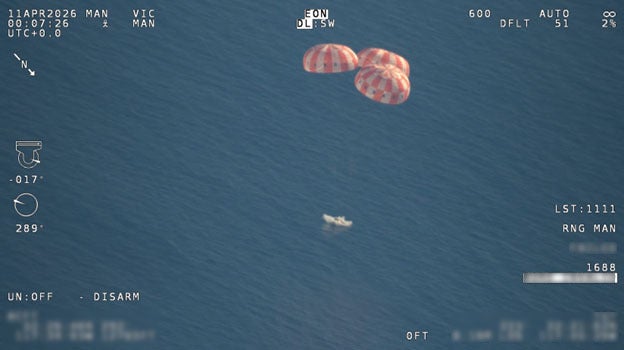
At roughly 15 minutes before splashdown, the tempo changes. Crew workload increases rapidly as pilots hold the aircraft in precise position while sensor operators focus on an extremely narrow azimuth window, searching for a target that will appear exactly where physics dictates and nowhere else.
Once the capsule is located, the window tightens further. There are only moments to capture the imagery that matters most, particularly drogue parachute deployment and main parachute inflation. These events unfold quickly and cannot be recreated.
What makes this phase uniquely demanding is the absence of recovery from error. The capsule follows its timeline regardless of conditions in the air. If the aircraft is not in the correct position, if the geometry is off or if the sensor is not performing exactly as intended, the opportunity is lost. There is no reset, no second pass and no alternate timeline. That reality places intense pressure on both pilots and sensor operators as the final seconds tick away.
After splashdown, the mission does not end. The aircraft remains on station to provide live video of capsule stabilization, crew recovery and parachute assembly retrieval. That footage becomes critical during post mission analysis, when engineers study deployment performance and investigate even subtle anomalies that could influence future missions.
One Team, One Outcome
These missions succeed because of trust between pilots and sensor operators, between planners and aircrew and between L3Harris teams and their NASA counterparts. Stable flight enables the full performance of the WESCAM MX-Series systems. Clear and continuous communication allows crews to adjust instantly as conditions evolve.
Weather variability, atmospheric distortion, airspace restrictions and shifting timelines are always part of the equation. L3Harris crews are trained to adapt in real-time, modifying aircraft positioning and sensor configuration while preserving mission objectives.
Why Artemis II Imagery Matters
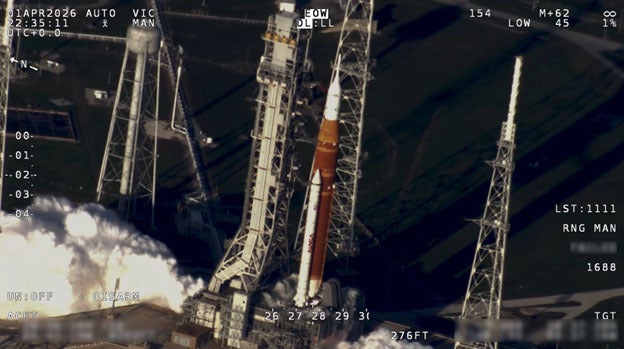
The imagery captured by WESCAM MX-series systems supports far more than documentation. It enables engineering validation, supports anomaly detection and contributes directly to mission safety and reliability. For Artemis II, that imagery helped establish confidence in parachute performance and recovery operations, systems astronauts depend on in the final moments of their mission.
From launch support to splashdown and recovery, L3Harris’ role in Artemis II reflects the precision, discipline and accountability required to support the nation’s most visible and consequential space missions. When there is only one chance to get it right, preparation and performance become inseparable. We are ready and we will be there for the next space flight.