By Larry Q. Burris Jr., Head of Army Ground, Air and Communications Programs at L3Harris, and retired U.S. Army brigadier general
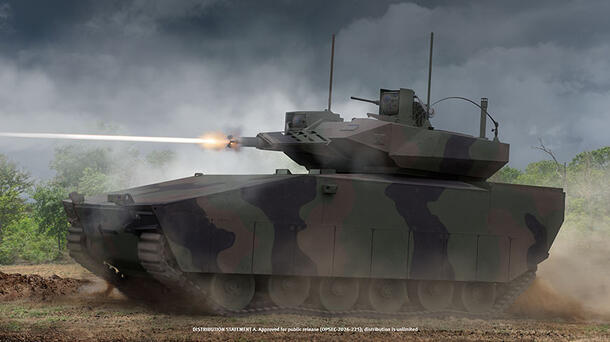
Team Lynx's XM30 delivers what the National Defense Strategy demands: non-traditional innovation, proven industrial capability and domestic production at scale.
The National Defense Strategy (NDS) calls for America to "Supercharge the U.S. Defense Industrial Base" by reinvesting in production capacity, empowering innovators, adopting technologies like artificial intelligence and removing obstacles to deliver capabilities at the scale and speed the Joint Force requires. The U.S. Army's XM30 program shows how to execute that vision.
As commander of Charlie Company, 3-15 Infantry during Operation Iraqi Freedom, I led my soldiers through the opening days of the war – from crossing into Iraq in the van of 3rd Infantry Division's march to Baghdad, through numerous meeting engagements in places such as Najaf, Karbala, and Mahmoudiya, to participating in both of 2nd Brigade’s Thunder Runs into Baghdad. Time and again, our infantry fighting vehicles made the difference. I understand the criticality of these platforms to winning on the battlefield and bringing soldiers home alive. The future battlefield will be even more demanding, and our infantry squads need a modernized fighting vehicle to survive and win.
Team Lynx exemplifies the “Arsenal of Freedom” that the Department of War is working to rebuild, with companies from across the defense tech ecosystem collaborating to deliver capability with speed and agility. The partnership includes American Rheinmetall, L3Harris Technologies, Raytheon, Textron Systems, Anduril Industries and Allison Transmission – aligning innovation with reliability, advanced technology with production discipline and speed with long-term sustainment. This is the industrial approach the NDS envisions.
Read Full Article in 'Defense News'