
By Duncan Thomas
Vice President and UK Country Executive, L3Harris
The UK's Defence Investment Plan provides the clearest indication yet of how the government intends to translate strategic ambition into military capability. While much of the discussion has focused on investment levels, the more significant signal may be where the Plan places its emphasis: readiness, resilience, integration and the ability to adapt to a rapidly changing threat environment. Investment is essential. But funding alone does not create military advantage.
The harder challenge is ensuring new capability can be delivered, integrated and evolved at the pace required by today's threat environment.
Across defence, technology cycles are accelerating. Software is updated continuously. Electronic warfare techniques evolve rapidly. Autonomous systems improve through constant iteration. Digital technologies are reshaping how militaries operate across every domain.
At the same time, many of today's defence platforms may remain in service for decades.
This creates a growing challenge for defence organisations: how can long-term capability programmes remain relevant in an environment where technology and threats continue to evolve?
That question is becoming increasingly important for governments, armed forces and industry alike.
From Acquisition to Adaptation
For many years, defence modernisation has focused primarily on acquiring new platforms and systems. Those investments remain critical.
One of the clearest messages from the Defence Investment Plan is that capability must be viewed as a continuous journey rather than a one-time procurement activity. Whether the focus is autonomy, digital integration, resilient communications or long-range sensing, many of the priority capabilities identified by the government will require regular evolution throughout their service lives.
Operational advantage increasingly depends on what happens after a capability enters service.
Recent conflicts have demonstrated the importance of learning and adapting quickly. New threats emerge rapidly. Operational lessons are generated continuously. Technologies that provide a significant advantage one year may require enhancement or adaptation the next.
As a result, defence organisations are placing greater emphasis on flexibility, modularity and upgradeability throughout a capability's lifecycle.
The ability to adapt can no longer be considered an additional benefit. It is now a fundamental requirement.
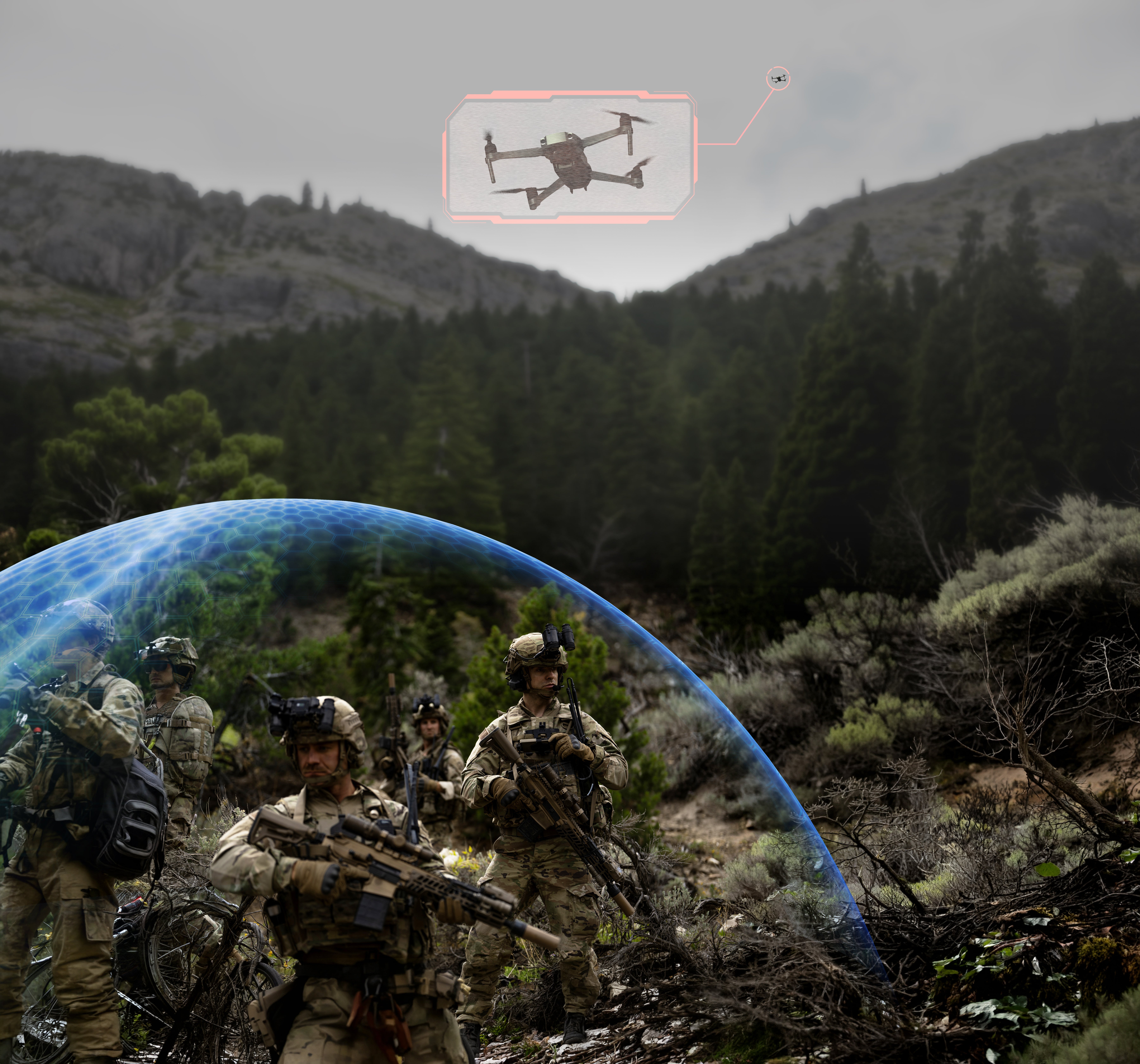
That shift from replacement to adaptation can already be seen in how existing defence systems are being evolved through software. Recent developments such as Wraith Shield™ demonstrate this approach in practice. Developed as an enhancement to the L3Harris Wraith® waveform, Wraith Shield transforms existing tactical radios into AI-enabled counter-UAS sensors, allowing an established communications capability to be rapidly adapted to address emerging operational requirements. Rather than requiring wholesale platform replacement, the approach illustrates how software-defined and modular technologies can evolve in response to changing threats and mission needs.
In short, defence is moving from a model focused solely on acquisition to one increasingly centred on continuous adaptation.
Integration Creates Advantage
A second theme running through defence modernisation is the growing importance of integration.
The Plan's emphasis on an Integrated Force reflects a growing recognition that operational advantage is increasingly created between systems, rather than by systems alone.
This principle has already been demonstrated through activities such as EVEREST UK, where L3Harris and industry partners integrated communications, sensing, electronic warfare and command-and-control capabilities to demonstrate how existing technologies can be connected rapidly to improve operational effectiveness. The activity highlighted the value of interoperability, partnership and integration in delivering capability at pace.
Military effectiveness is no longer determined solely by the performance of individual platforms. Increasingly, success depends on how effectively information moves between sensors, decision-makers and operators across the force.
A sensor only delivers value when information reaches the right user at the right time. A platform achieves its full potential when it can operate seamlessly as part of a wider operational network.
The ability to connect systems across domains is becoming a decisive factor in operational effectiveness.
This is why capabilities such as resilient communications, command and control, electronic warfare and mission integration are receiving increased attention across allied defence forces.
In many situations, competitive advantage will not come from having access to more information. It will come from turning information into decisions faster.
Resilience is More Than Capacity
The Defence Investment Plan also reinforces the importance of sovereign capability, industrial capacity and national resilience. These priorities are rightly receiving increased attention.
At the same time, resilience is evolving. It is no longer defined solely by industrial output or manufacturing capacity.
Digital infrastructure, software assurance, cyber resilience and the ability to maintain and upgrade critical systems throughout their lifecycle are becoming equally important.
For defence organisations, resilience increasingly means ensuring that capability remains secure, effective and adaptable long after it has been fielded.
For industry, resilience extends beyond the delivery of technology itself. It includes the ability to sustain, repair and modernise capability wherever customers need it. L3Harris' maintenance, repair and overhaul facilities in locations such as Farnborough in the UK and Brisbane in Australia provide examples of how forward-deployed support infrastructure can help maintain operational readiness for both domestic and allied users.
In many cases, the ability to evolve a capability over time may prove just as important as the ability to deploy it in the first place.
Industrial Resilience Enables Delivery at Pace
Delivering capability at pace requires more than investment in frontline systems. It relies on a robust ecosystem of suppliers, technology partners and specialist manufacturers that can respond quickly to evolving operational requirements.
Across the country, L3Harris works with a predominantly UK-based supply chain, including a significant number of small- and medium-sized enterprises that provide specialist expertise, innovation and agility. These partnerships help strengthen resilience across the defence industrial base while supporting UK jobs, skills, investment and capability development.
This reflects a broader trend visible throughout the Defence Investment Plan. Future capability will depend not only on what is acquired, but on the strength, responsiveness and diversity of the industrial ecosystem that supports it.
As defence modernisation accelerates, the ability to draw upon a resilient and responsive supply chain will play an increasingly important role in turning investment into operational capability.
Turning Investment into Capability
The Defence Investment Plan provides an important indication of how the UK intends to build military advantage over the coming decade. While investment remains a critical enabler, the Plan also points towards a broader shift in thinking: one that places greater emphasis on adaptability, integration, resilience and readiness.
Realising its full potential will require more than investment alone. It will require close collaboration between government and industry to ensure that capability is delivered effectively, integrated rapidly and continuously improved as operational requirements evolve.
As the pace of technological change continues to increase, the organisations that succeed will be those that can balance long-term investment with agility, resilience with innovation and scale with speed.
The future force will not be defined solely by the capabilities it acquires. It will be defined by how quickly those capabilities can adapt to meet the challenges of an increasingly complex and dynamic security environment.
For industry, the challenge is clear. Delivering defence capability is no longer solely about providing technology. It is about helping customers integrate, evolve and sustain capability throughout its lifecycle. As defence priorities continue to evolve, organisations that can adapt, scale and accelerate delivery will be best placed to help customers convert investment into operational advantage.

