There are few jobs more dangerous than clearing mines. For decades, the burden has fallen on sailors and divers to carry out the slow, painstaking work in waters that have already been proven deadly.
L3Harris built Hunterwater with sailor and diver safety in mind.
"Minehunting has always demanded extraordinary courage from those tasked with carrying it out," said Nino DiCosmo, President, Maritime, Space and Mission Systems, L3Harris. "Hunterwater is our answer to a question the Navy has been asking for decades: How do you clear a minefield without putting sailors in it?"
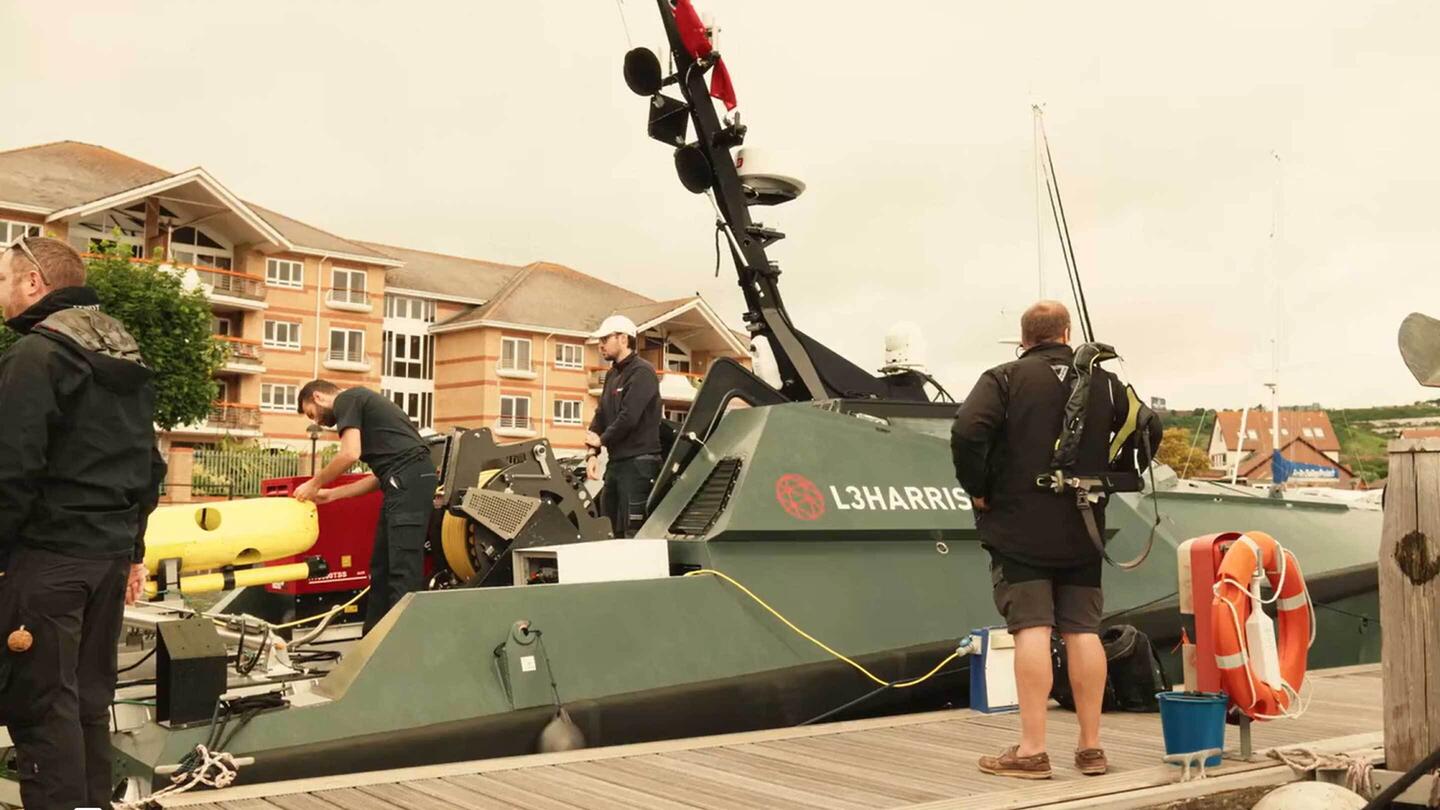
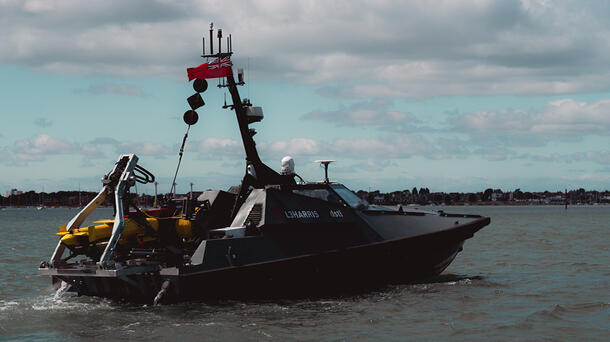
Hunterwater is an unmanned surface vehicle designed to handle the entire minehunting cycle on its own. It searches for, identifies and neutralizes threats without putting a single sailor in the water. It is not a concept or a prototype – it is a fielded system built for the realities of modern mine countermeasure operations where speed, safety and cost all matter.
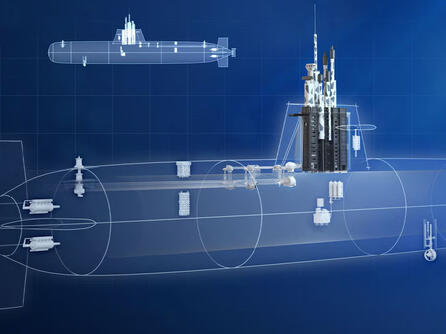
The system deploys an onboard robotic kit that includes the ROVSCAN, a hybrid capability that combines the mobility of a remotely operated vehicle with sidescan sonar detection. Once a threat is located, a compact, disposable, acoustic-guided vehicle autonomously re-acquires and neutralizes the threat. The use of a low-cost disposable neutralizer keeps operational costs manageable without compromising effectiveness.
Hunterwater’s flexibility makes it particularly well suited to today's operational environment. Capable of operating unmanned or with a crew aboard, the system can reach more than five nautical miles from the host vessel. It works alongside other unmanned surface vehicles and autonomous underwater vehicles, including L3Harris' Iver4, and can be transported in a single 40-foot ISO container. For a navy that needs to move fast and operate across multiple theaters, that kind of portability matters.
When the mission calls for minehunting, Hunterwater answers.