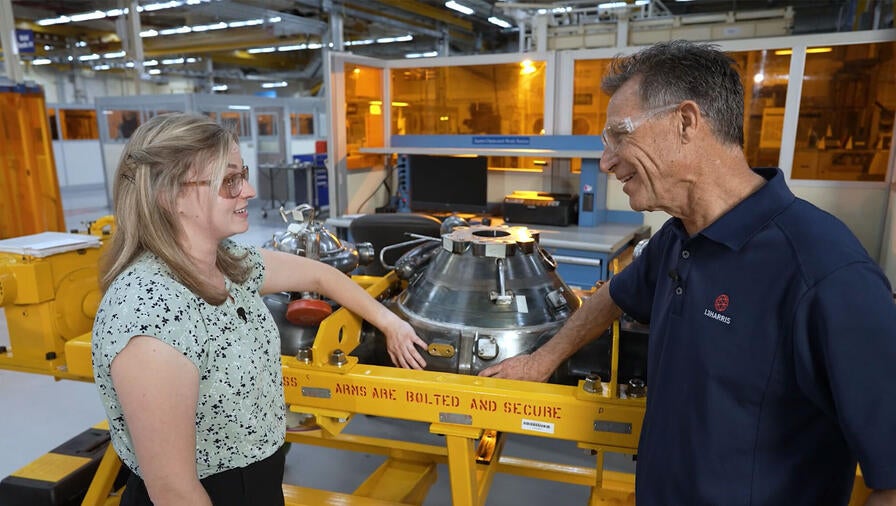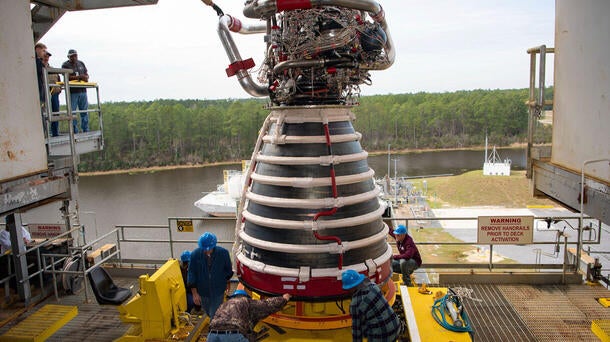
Preparations are underway for NASA’s Artemis V mission, with the first RS-25 engine for the SLS (Space Launch System) rocket now fully assembled at NASA’s Stennis Space Center in Mississippi.
Designated E20001, the engine is one of four new RS-25s that will help power the core stage of the heavy-lift exploration rocket during the Artemis V mission. The first four Artemis missions are launching on SLS rockets equipped with repurposed engines from NASA’s Space Shuttle Program.
“This milestone marks the newly built RS-25 engine’s transition from a development program to a production program,” said Mike Lauer, RS-25 program director, Aerojet Rocketdyne, L3Harris. “Beginning with Artemis V, the SLS core stage will be powered by brand new engines built using modern techniques that have reduced production costs while maintaining the engine’s legendary reliability and performance.”
The next step for E20001 is acceptance testing, where the engine will undergo a static hot-fire test on the Fred Haise Test Stand (formerly A-1 Test Stand) at NASA Stennis for 500 seconds to demonstrate the performance characteristics required for SLS missions. During the test, the engine will run at full thrust – 111 percent of the shuttle engine’s rated thrust – dip down to 80 percent, and then throttle back up.
“We take a ‘test like you fly’ approach when validating engine performance, and this test is roughly representative of the RS-25’s in-flight operating profile,” added Lauer. “During actual missions, for example, the SLS core stage engines throttle back briefly when the vehicle’s solid rocket boosters are jettisoned.”
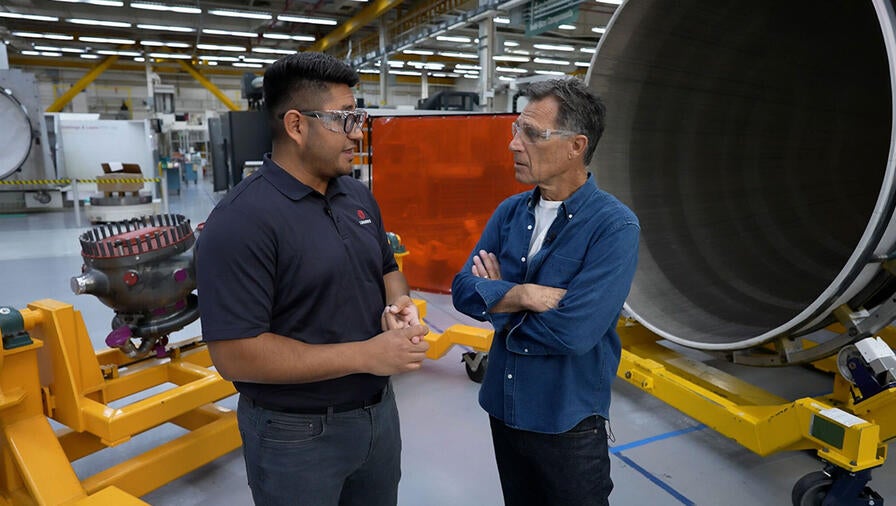
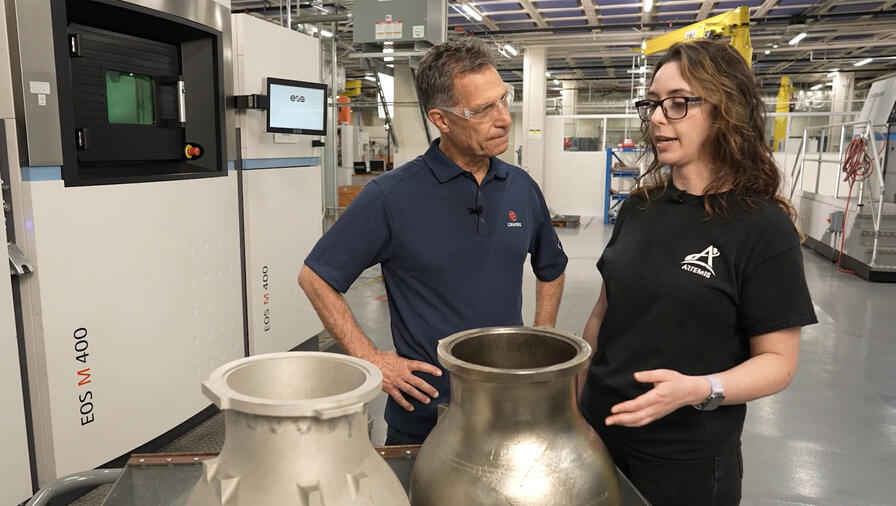
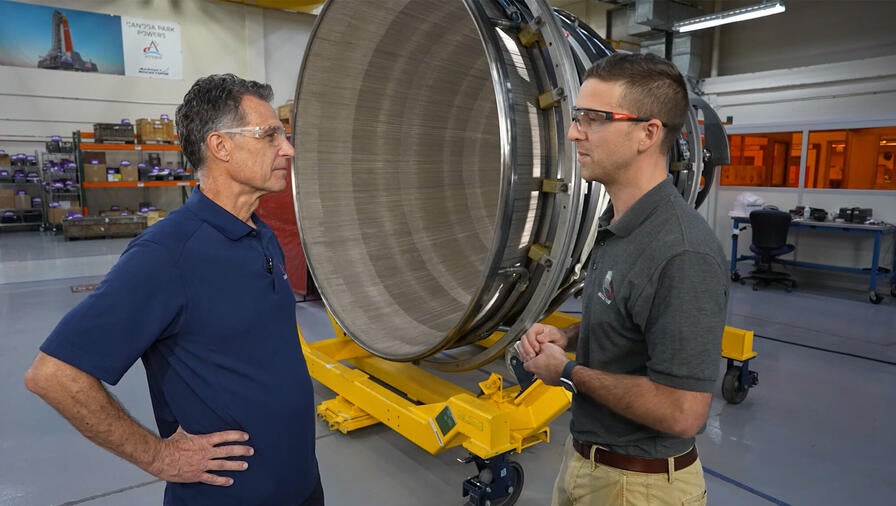
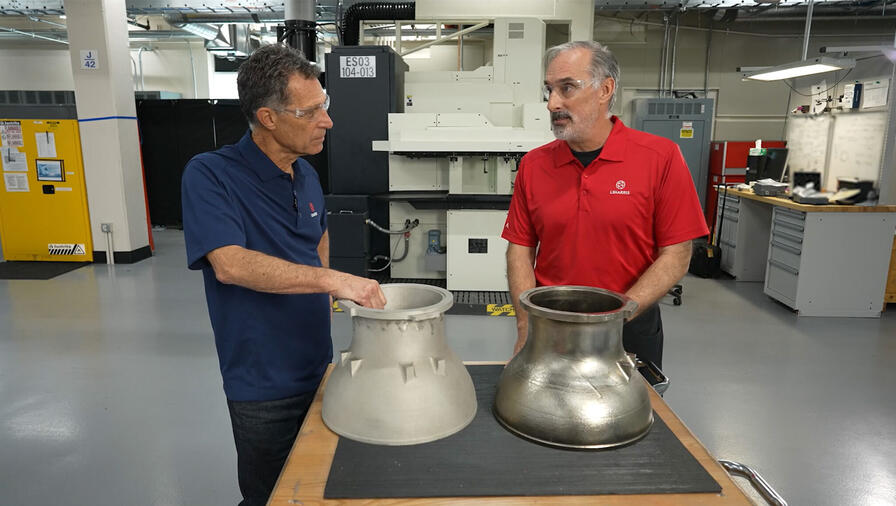
The new RS-25 engines for Artemis V and beyond feature 3D-printed parts and major structural components that were redesigned to take advantage of modern manufacturing techniques to reduce cost and lead time. For example, the main combustion chamber, nozzle, and powerhead – the latter serving as the structural backbone of the engine – have fewer parts, significantly reducing the number of steps, including welds, required for assembly.
“We’ve maintained all of the flow passages and performance aspects of earlier RS-25 engines, but modernized the way we build different components,” continued Lauer. “The team is currently assembling the three remaining Artemis V engines, and as production gathers momentum, we expect to incorporate lessons learned to further boost production efficiency.”
Learn more about the new components in the RS-25 engines for Artemis V and beyond in the L3Harris video series: On the Road to the Moon.