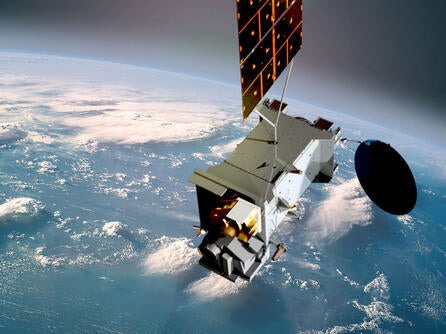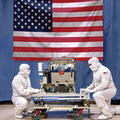
In a groundbreaking step toward protecting Earth from the sun’s most extreme events, the National Oceanic and Atmospheric Administration (NOAA)’s Space Weather Follow On - Lagrange 1 (SWFO-L1) satellite observatory launched successfully on Sept. 24 aboard a SpaceX Falcon 9 rocket. This new mission – NOAA’s first satellite designed specifically for continuous, operational space weather observations – is now on a million-mile journey to Lagrange Point 1 (L1). From this unique vantage point, the satellite will provide continuous monitoring of solar storms.
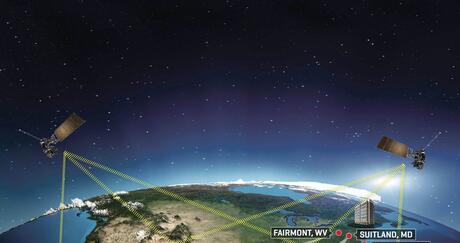
L3Harris Technologies designed and delivered the Command and Control (C2) system that flies and maneuvers the spacecraft. Integrated with the L3Harris-built ground system, the NOAA SWFO C2 ground system sends science data to the agency’s Space Weather Prediction Center. From there, the data will be distributed to users across the globe, helping governments, industries, and communities prepare for and mitigate the impacts of space weather.
“L3Harris is proud to support this unique NOAA mission, which will provide an early-warning beacon for potentially disruptive space weather events,” said Shikha Ganguly, General Manager, Weather, L3Harris. “Our robust ground and data operations will ensure the continuous delivery of data and imagery protecting critical national infrastructure.
This mission is important because space weather events such as solar flares and coronal mass ejections can produce powerful magnetic fields when they reach Earth’s atmosphere. While colorful aurora displays are one familiar manifestation of these effects, they can also disrupt power grids and knock out GPS systems and communications networks relied upon by emergency responders, pilots and the military.
The satellite’s journey to L1 will take approximately four months, after which it will undergo a thorough checkout and validation of its instruments.
For more information on NOAA’s SWFO-L1 mission, visit NOAA’s SWFO-L1 launch page.