The technological landscape of modern warfare is changing, and the U.S. Army is not waiting to find out whether their technology can outpace the adversary.
Across a growing series of experimentation events, the Army is testing emerging capabilities through increasingly realistic and demanding scenarios. From Lightning Surge and Ivy Sting to Project Convergence-Capstone 6 and other experiments, these events are creating opportunities to test not just individual technologies but how an entire network performs together.
“For L3Harris Technologies, these tests are providing invaluable and actionable data to inform future innovations,” said Chris Aebli, President, Communications & Spectrum Dominance, L3Harris. “They provide the opportunity to proactively discover what works, identify what needs to improve and then rapidly turn those lessons into capabilities.”
Real-Life Results From Real-Life Testing
Modernization happens outside the laboratory.
A capability that performs perfectly in isolation still must work across complex terrain, connect with other systems and move increasing amounts of data – all while remaining resilient in contested environments.
Across the Army’s experiments, L3Harris demonstrated assured communications and networking capabilities designed to connect soldiers, sensors, platforms and nodes, according to Larry Burris, Senior Principal, Business Development, L3Harris.
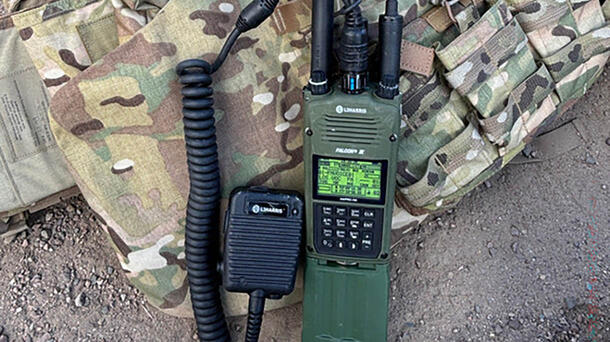
“The tactical radio needs to be more than a voice communication device,” said Burris. “It serves as a data transport node and a smart sensor within a broader network, moving information and enabling new software-driven capabilities at the tactical edge. Each exercise and experiment performed adds another layer of learning for both parties.”
At one event, the challenge might be moving more data across the network, continued Burris; at another, it may be connecting technologies from multiple vendors or ensuring constant communications across difficult terrain. Ultimately, these tools must help a soldier make better decisions faster.
The Strength of Government-Industry Collaboration
The combined results of the recent Army modernization experiments are proving what happens when industry works alongside the military throughout the development process – not simply delivering technologies, but experimenting, learning and adapting together in an ecosystem.
That iterative approach supports the Army Command and Control vision. The future network will require open architecture, interoperability and technology that must evolve with threats, missions and software changes.
For L3Harris, these events build confidence that the technology the company provides to soldiers is enabling them to shoot, move, communicate and, most importantly, win battles against near peer competitors.
As the environment becomes more contested – and the decisions more urgent – there is no substitute for trusted, dependable capabilities that enable more rapid decision making and decisive victory over the enemy.

