As military forces worldwide confront increasingly sophisticated threats in contested environments, they require more than routine modernization – they need transformational capabilities that deliver information dominance. When seconds determine survival, advanced processing solutions with exponentially greater computing power, dramatically expanded memory storage and open architecture backbones fundamentally change military operations across all domains.
"The real breakthrough isn't just faster processors," says Eric DiStasi, President, Airborne Solutions at L3Harris. "It's about giving our warfighters information so quickly that they can see the threat, make a decision and act on it before the adversary even has a chance to react. In modern combat, that speed is everything."
From Data Overload to Decision Dominance
Modern military platforms generate staggering amounts of data.
Fighter jets simultaneously operate advanced radar, infrared sensors, electronic warfare systems, communications networks and weapons management while receiving intelligence from satellites, other aircraft and ground forces.
Attack helicopters process terrain data, threat warnings and targeting information while coordinating with ground units.
Unmanned platforms manage autonomous operations while streaming sensor data to operators.
The challenge isn't collecting information – it's making sense of it fast enough to matter.
L3Harris' advanced processing solutions enable data fusion of multiple sensors into a single, coherent picture. The system automatically identifies priorities and presents actionable intelligence, eliminating the cognitive burden of manually correlating separate radar tracks, electronic warfare alerts and threat warnings.
"We're moving pilots and operators from asking 'What's happening?' to 'What should I do about it?'" said DiStasi. "When you’re under combat stress, you don’t have minutes to think – you have seconds. Our systems do the heavy lifting so they can focus on making informed decisions to counter threats, not on interpreting data."
The Storage Revolution: Knowledge is Firepower
Memory storage isn't glamorous, but it's lethal. L3Harris' solutions enable platforms to carry comprehensive threat libraries, detailed electronic warfare databases and years of operational intelligence – all onboard, accessible instantly, without needing to request information from external sources.
When a threat radar activates, the platform doesn't transmit a query and wait for a response. It already knows the signature, understands the capabilities and vulnerabilities, and recommends countermeasures in seconds. This self-sufficiency proves decisive in contested environments where communications may be jammed or denied.
Open Architecture: The Strategic Multiplier
Traditional military systems lock capabilities at the moment of design. L3Harris' open architecture approach breaks this cycle, accepting software updates that enable rapid integration of new capabilities.
The strategic advantage is clear: platforms can evolve as fast as threats emerge. What once required a complete system overhaul now happens through software – new electronic warfare techniques, updated threat libraries, enhanced sensor algorithms, even integration of weapons that didn't exist when the platform first flew.
"Open architecture isn't just about technical flexibility," notes DiStasi. "Threats don’t wait, and neither can we. Our adversaries are constantly evolving, and our troops need systems that can keep pace – not systems that are already outdated by the time they reach the field. When we can push a software update in months instead of waiting years for a hardware overhaul, we stay ahead of the threat."
Real-World Impact: From F-35s to the Entire Fleet
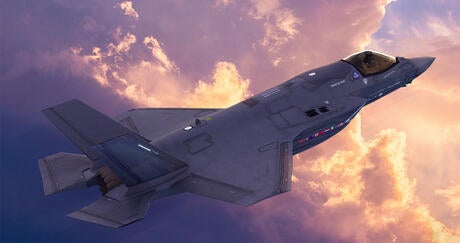
The F-35 Lightning II's Technology Refresh-3 (TR-3) upgrade demonstrates these principles in action. L3Harris' solutions deliver 25 times more computing power and five times more memory storage, enabling the aircraft to process more sensor data simultaneously, track more threats and integrate new weapons. They’re also upgradable to support future AI-enabled applications – all while maintaining the pilot's ability to absorb information without cognitive overload.
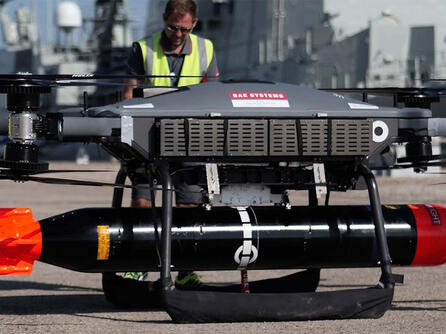
These are the identical technologies that transform capabilities across all military platforms. Attack helicopters such as the Apache benefit from enhanced threat detection and targeting precision. Army ground vehicles like the XM30 gain improved situational awareness in contested environments. Unmanned platforms like the MQ-series extend human decision-making across greater distances while reducing operator workload.
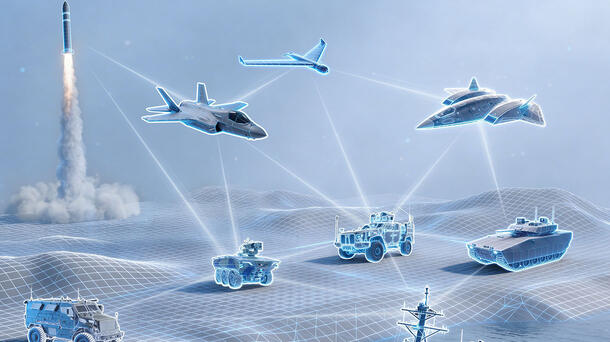
When hundreds of networked platforms operate as a unified combat cloud, adversaries must assume their every move is being detected, monitored and targeted faster than they can react.
"This is about building a force so capable that adversaries think twice before they ever act – it enables deterrence," DiStasi said.
Outpacing Tomorrow's Threats
As threats evolve and battlespaces become more contested, the military advantage increasingly belongs to those who process information faster and make decisions quicker.
L3Harris' advanced computing, memory storage and open architecture solutions ensure American and allied warfighters maintain that edge – not just today, but against threats that haven't yet emerged.
"We're not just building better computers," DiStasi emphasizes. "We're building foundational defense technologies that keep our warfighters one step ahead, no matter what the threat looks like. That’s not just our mission – that’s our obligation to our warfighters who depend on this technology to accomplish their mission and get home safely."