L3Harris is further diversifying its capabilities in the undersea and space domains. With a contract to supply future suborbital sounding rockets and continued facility expansion to support next generation torpedo propulsion systems, neither outer space nor the deep sea are limiting factors for L3Harris.
At L3Harris we anticipate and mitigate risk with end-to-end solutions that meet our customers’ mission-critical needs across all domains. The company’s target missile production site in Orlando, Florida, is primarily focused on designing, building and deploying sophisticated ballistic missile targets that are capable of mimicking a variety of realistic threat scenarios to thoroughly test U.S. missile defense technologies.
Building on the success of their ballistic missile target business, the Orlando team is leveraging its expertise in areas like avionics, advanced vehicle guidance systems, and attitude control systems to expand into adjacent markets.
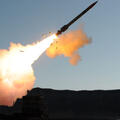
In January, the U.S. Space Force awarded L3Harris an indefinite delivery/indefinite quantity contract to supply sounding rockets, or suborbital research rockets, to launch a variety of payloads for U.S. government agencies on an as-needed basis. L3Harris will design, deliver and help operate launch vehicles that achieve the customer’s specific mission objectives.
The Space Force sounding rocket contract comes amid L3Harris Orlando’s parallel expansion into undersea propulsion manufacturing.
“We’re building on our existing capabilities and expanding our operations to support the national security needs of today and tomorrow,” said Mike Holton, General Manager, Orlando Operations, Aerojet Rocketdyne, L3Harris. “Whether it’s providing launch services or developing the next-generation of torpedo propulsion systems, it’s important that we meet and exceed the evolving needs of our customers.”
The L3Harris team in Orlando recently modified 10,000 square feet of factory space to build Stored Chemical Energy Propulsion Systems (SCEPS) for next-generation torpedoes. SCEPS harnesses a reaction between lithium and other chemicals to produce unique propulsion characteristics. L3Harris is under various contracts to provide SCEPS to the U.S. Navy.
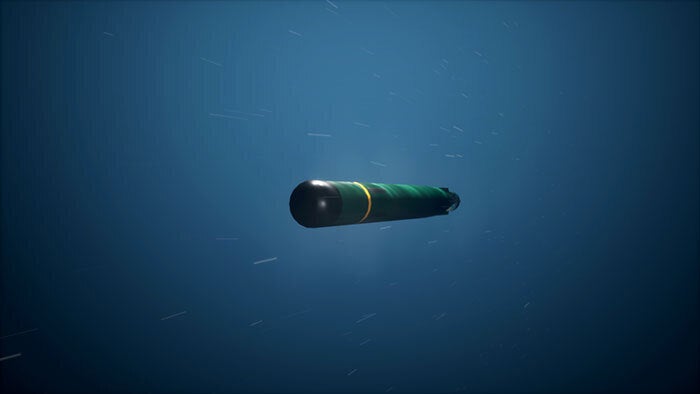
“This year, we’re on contract to deliver multiple full afterbodies,” Holton said, referring to the part of the torpedo that houses its propulsion system. “Our team specializes in the lithium casting and energetic loading for the SCEPS boiler system.”
Between the addition of torpedo propulsion manufacturing and the reintroduction of ground-launched rockets, the L3Harris team in Orlando is ready to meet the evolving needs of its customers.