
The Next 250 Years Start With What We Build Now

CH
Corporate Headquarters
Jul 22, 2026 | 5-MINUTE Read
Logos of L3Harris and America250

For 250 years, American progress has been driven by builders. 

Not just by those who imagined the future, but by those who designed it, tested it, manufactured it and pushed it into the real world. The story of the United States is, in many ways, the story of what people here chose to build next: railroads that connected a continent, aircraft that redefined distance, spacecraft that extended human reach and digital networks that reshaped modern life.

Now the country is entering another turning point.

The next era of American innovation will not be defined by a single invention or industry. It will be shaped by a new generation of technologies that are more autonomous, more connected, more adaptable and more software-driven than the systems that came before them. The future is being built around platforms that can evolve quickly, respond to emerging threats and operate in environments that demand speed, resilience and flexibility.

That is the space L3Harris is helping to shape.

From hybrid-electric aircraft to modular electronic warfare systems, AI-enabled sensing and scalable launched effects, the company is contributing to technologies that reflect a larger truth about the next 250 years: the most important systems of the future will not just be advanced. They will be adaptable.
Flight is entering a new chapter

American leadership has long been tied to leadership in the air. But the next chapter of aviation may look very different from the last.

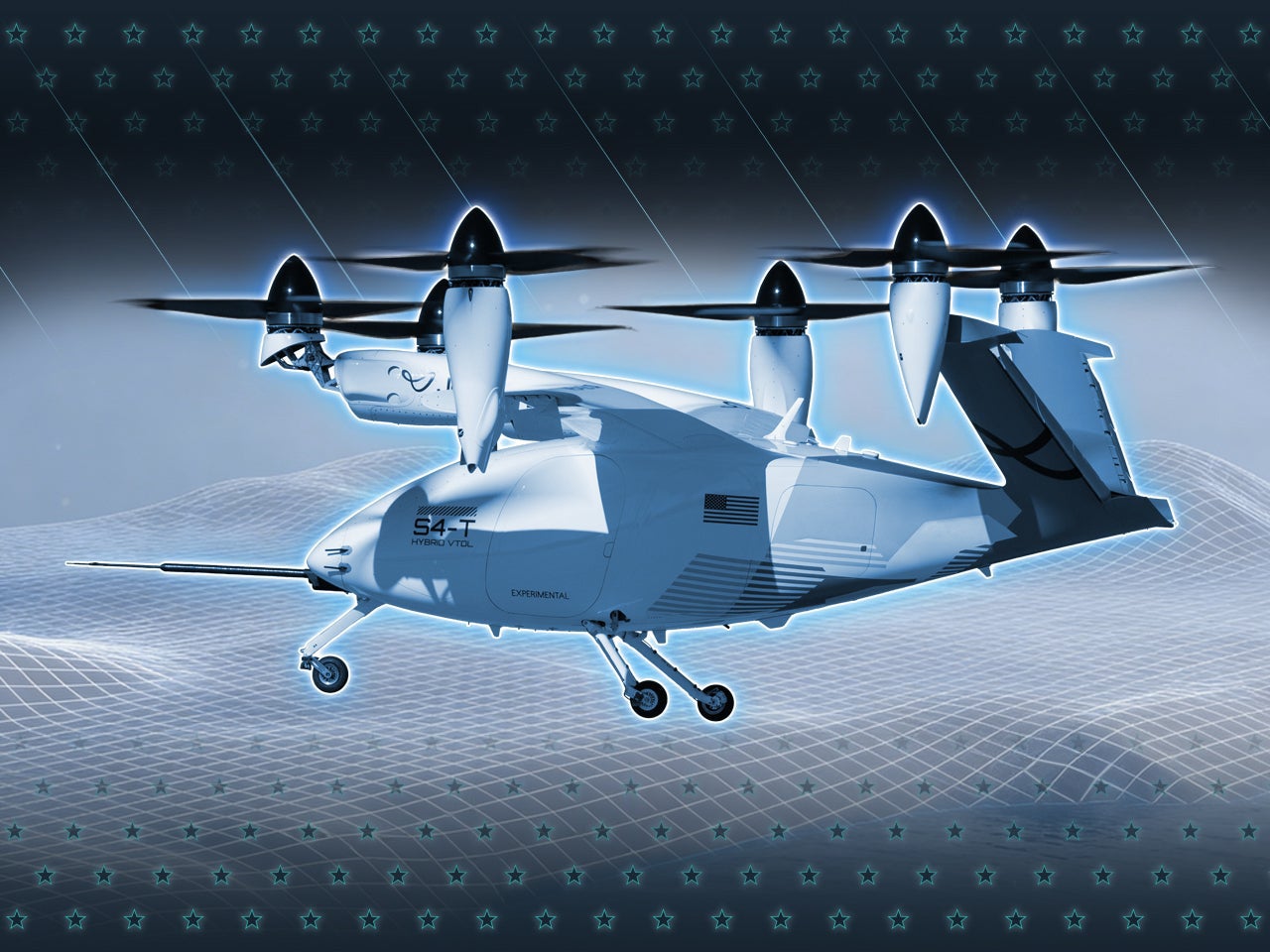
One example is L3Harris’ work with Joby to demonstrate an uncrewed hybrid eVTOL aircraft for the U.S. Army. The collaboration points toward a future in which aircraft are not defined solely by speed or range, but by operational versatility. Systems may need to launch without runways, operate with reduced acoustic signatures, support logistics or sensing missions and reach locations that are difficult for traditional aircraft to access.

That is a meaningful shift. The future of flight is not only about building faster platforms. It is also about creating aircraft that are more flexible, more efficient and better matched to the demands of distributed operations.

As America looks ahead, this kind of aviation innovation suggests that the next breakthroughs may come from rethinking the aircraft itself.

Aircraft flies over digital mountains

Adaptability is becoming a strategic advantage

If past generations built platforms designed for a fixed set of missions, the next generation will need to build systems that can evolve as conditions change.

That is what makes Viper Shield so important. Designed for the F-16, the system brings a modular approach to electronic warfare — one that allows capabilities to be updated and adapted over time rather than locked into a static architecture.

That modularity is more than a design choice. It reflects a broader change in how advanced defense systems are conceived and operate with other mission systems. In a threat environment that evolves rapidly, relevance can no longer depend on standing still. The systems that endure will be the ones built to change.

For the next 250 years of American innovation, that idea may prove foundational: not just building powerful technologies but building technologies that can keep pace with the world around them.

The smartest systems may be the ones already in the field

Transformation is not always about building from the ground up. Sometimes it comes from transforming existing systems into something more capable.

L3Harris is redefining tactical communications capabilities by turning an existing global footprint of hundreds of thousands of radios already carried by troops into an immediate defense shield. Instead of deploying new hardware, Wraith Shield™ software transforms these fielded devices into a distributed network providing electronic sensing and protection against unmanned systems.

Wraith Shield delivers a tactical edge against the modern threat of commercial drones. By delivering an AI-enabled counter-UAS solution via software, soldiers are connected to the most intelligent platforms while defending against current and future threats.

It is an example of how innovation is changing. Increasingly, advantage comes from integrating software, artificial intelligence and sensing into platforms that are already widely deployed. That makes capability more distributed, more scalable and potentially faster to field.

It also reflects a model that may define the future of American technology development: established defense expertise working alongside emerging commercial innovation to solve new operational problems in new ways.

The next 250 years will belong in part to those who can recognize hidden potential in the systems already around them and unlock it.

Scale and affordability will matter as much as sophistication

For decades, the most advanced defense systems were often defined by increasingly sophisticated capabilities. Today, military advantage depends not only on capability, but also on the ability to rapidly adapt, distribute effects across the battlespace and field solutions at meaningful scale.

That is part of the significance of Launched Effects.

L3Harris' launched effects portfolio, including Red Wolf and Green Wolf, reflects a broader shift toward capabilities that are scalable and designed to support evolving operational needs. As threats become more complex and operational demands continue to change, launched effects can provide warfighters greater flexibility across contested environments. This approach reflects a broader shift in defense thinking toward capabilities that can complement existing platforms, support distributed operations and respond to increasingly dynamic operational environments.

This is what future-building often looks like in practice. Not simply inventing more, but inventing smarter, with an eye toward cost, adaptability and mission utility from the outset.

The future may depend as much on architecture as hardware

If the next 250 years are shaped by speed, adaptability and integration, then one of the most important advances may be not just what gets built, but how it is built. That is the idea behind Modular Open Systems Approach, or MOSA — designing systems with standardized, interoperable architectures so components can be added, upgraded or replaced without redesigning the entire platform. In practical terms, that can make it easier to integrate new sensor, software, radio and mission applications as technology changes.

That matters because many legacy systems were not built for rapid modernization. Upgrades could be slow, costly and dependent on closed architectures that limited flexibility. MOSA, similar to software-defined architectures, offers a different path, helping operators modernize faster, improve interoperability and bring new technologies into the field more efficiently. It is a model built for a future in which threats evolve quickly and systems need to keep pace.

L3Harris is helping advance that approach through its work supporting the U.S. Air Force’s development of modular open systems for multiple air platforms. Together, those efforts reflect a broader shift in American innovation: moving away from static, closed designs and toward adaptable systems that can evolve over time. 

In the next era of national defense technology, that kind of flexibility may be one of the biggest advantages of all.

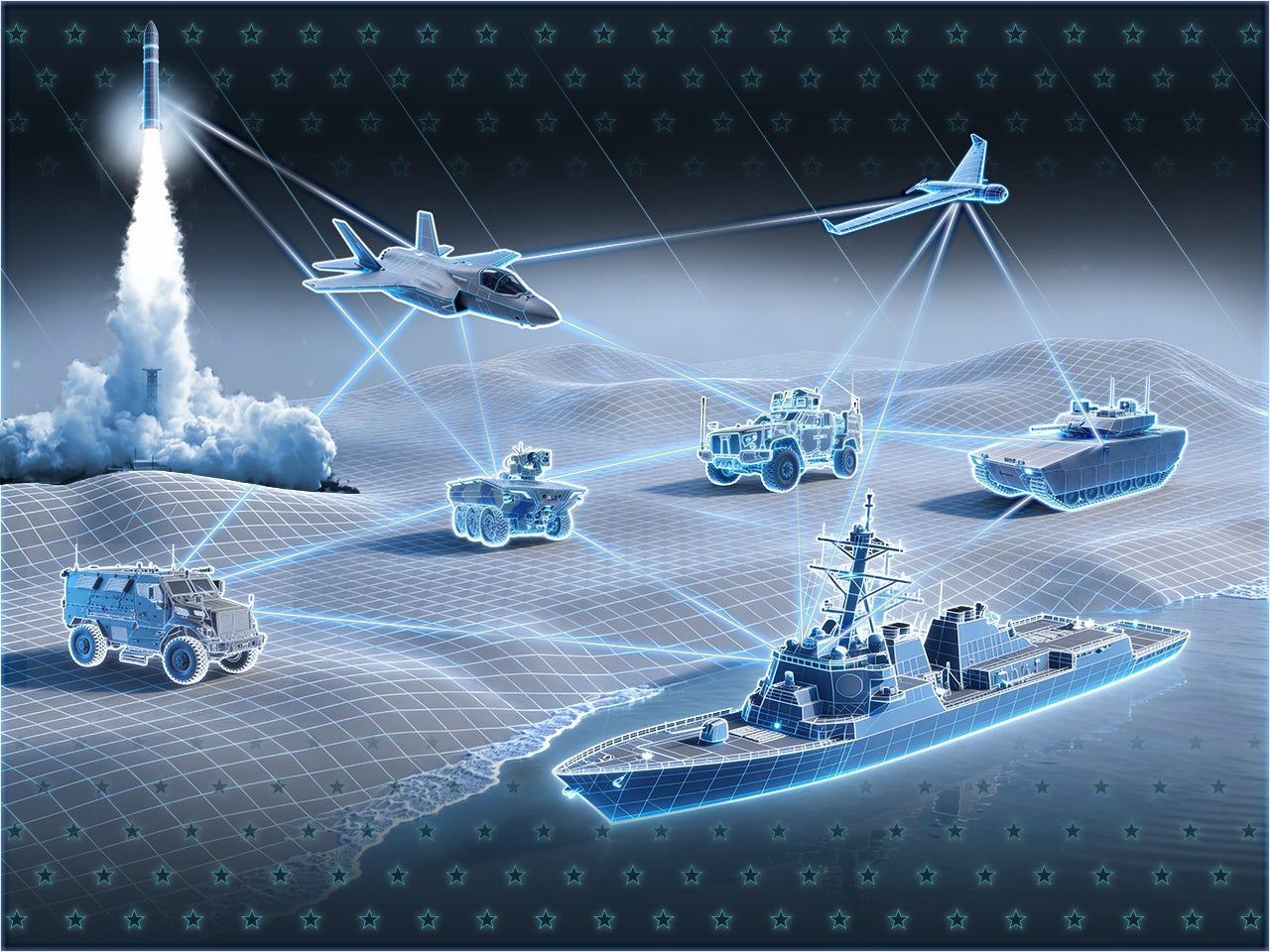
A missile, plane ship and ground vehicles connect via a digital line

Building the next era

The America250 milestone is an opportunity to celebrate the inventions, industries and technologies that helped define the country’s first 250 years. But it is also a reminder that national progress is never only retrospective. It depends on what gets built next.

The systems taking shape now will influence how people move, how militaries operate, how missions are connected and how national security evolves in the decades ahead. They will reflect not only technical ambition, but choices about resilience, speed, flexibility and scale.

That is why future-facing innovation is critical for our country’s national security.

And that is why the next 250 years begin now — in the prototypes, partnerships, modular architectures and mission systems already taking form.

America’s history has always been built by people willing to create what did not exist before. The next chapter will be written by those willing to do the same again.

Logos of L3Harris and America250

The story of American innovation is deeply interwoven with L3Harris’ past, present and future. Visit our America250 page to learn more about how our people and technologies helped to usher in new eras in aerospace and defense – and how we’re working to define what’s next.

VISIT AMERICA250 PAGE