The use of unmanned systems to attack ground forces and critical infrastructure has exploded onto the global stage in recent conflict zones. As solutions to counter these threats have become available, new variants of drones and deployment tactics are continually emerging.
Due to the array of unmanned systems deployed in the modern battlespace, no one counter-unmanned system solution can cost-effectively meet the needs of all military users against all drone threats. A layered approach of interoperable systems is now required to ensure appropriate force protection.
A Concerted Effort for Support
The Counter-Unmanned Aerial System (C-UAS) mission is an enterprise-wide priority for L3Harris Technologies to support global customers effectively and efficiently. The company is rapidly converging hardware and software to defend against a growing list of UAS threats.
“We are investing to rapidly scale kinetic and electronic warfare technologies for unmanned system engagement,” said Chris Aebli, President, Communications & Spectrum Dominance, L3Harris. “Our portfolio spans layered detection, identification, tracking and defeat, from tactical-edge operations to fixed-site and deployed-base protection.”
The acceleration of new artificial intelligence and machine learning features is placing new C-UAS capabilities in the hands of allied warfighters today, added Aebli.
Kinetic Kill for Sophisticated Threats
The UAS threat emerged initially as sophisticated, large vehicles tasked with entering allied airspace, dropping ordnance and returning, which militaries shot down with multi-million-dollar missiles.
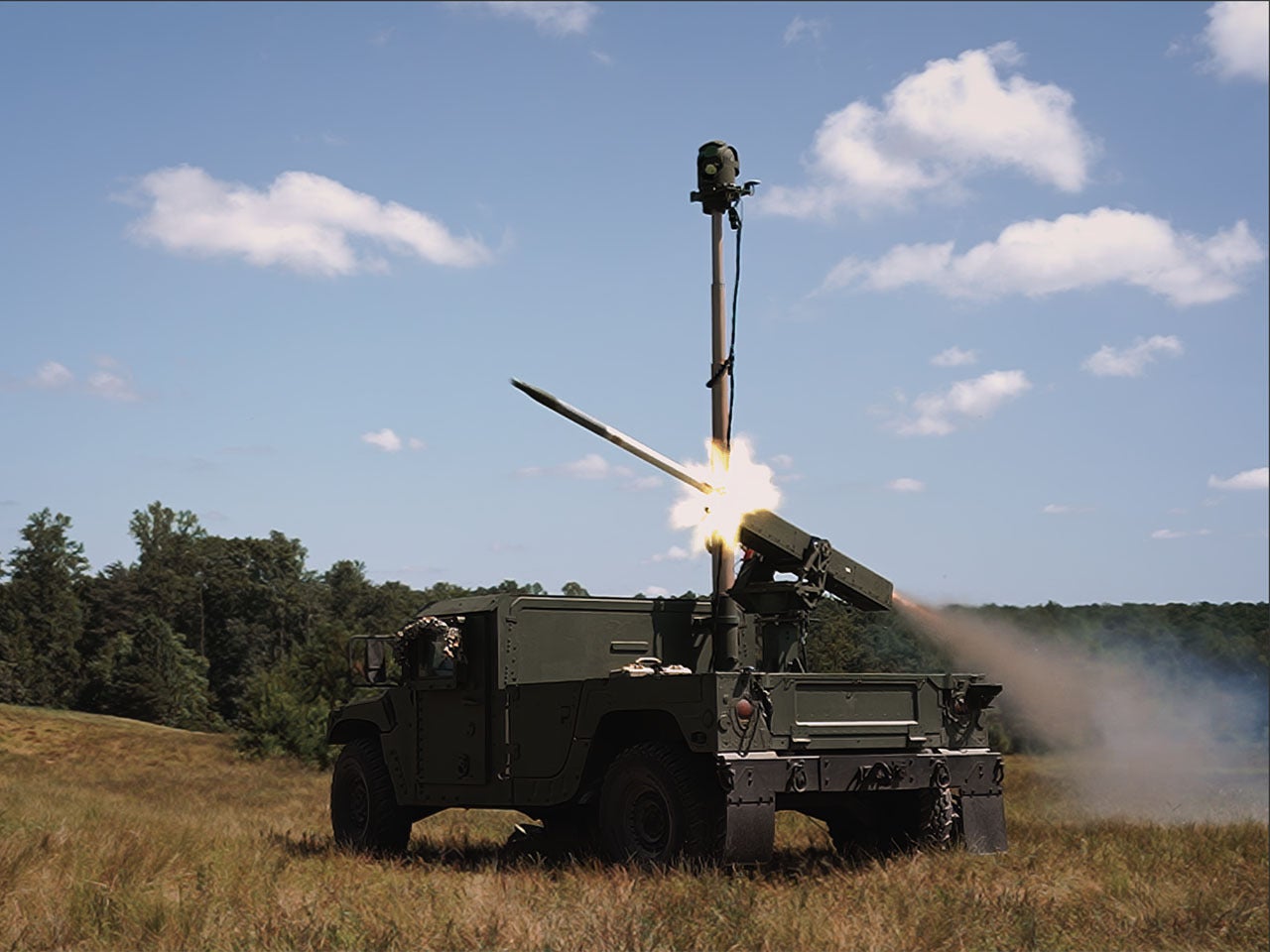
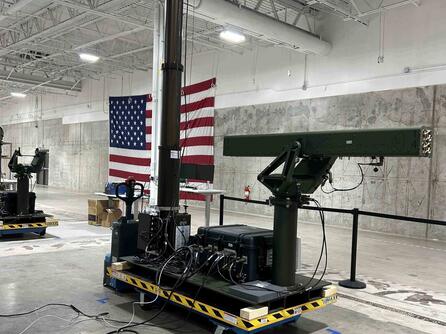
The L3Harris Vehicle-Agnostic Modular Palletized Rocket Equipment (VAMPIRE®) C-UAS system is a low-cost, portable capability that can be installed on vehicles to launch laser-guided munitions. The system’s sensor and software solutions are suited for integration onto tactical and non-tactical platforms.
“Across global combat operations, VAMPIRE provides precise engagement, effectiveness, usability and reliability,” said Tony Calderon, President, Targeting & Sensor Systems, Communications & Spectrum Dominance, L3Harris. “The system changes the economics of drone engagements, neutralizing low-cost drone threats using affordable, mass-produced laser-guided rockets.”
L3Harris initiated high-volume production of VAMPIRE systems in 2026 as a direct response to the United States and its allies’ need to combat persistent drone threats. Military forces have used the technology extensively in support of European combat operations, logging more than 350,000 operational hours since 2023.
Expanding Counter-Drone Reach

When medium-size threats – and those with longer stand-off ranges – entered the battlespace, cost-per-target leveraging rocket-based solutions increased as the guarantee of effectiveness dropped. For these types of targets, electronic warfare solutions are preferred.
L3Harris offers several solutions to defeat unmanned systems in this arena.
The Nimble Finch™ and Nimble Finch Pro™ solutions add a purpose-built jamming platform to the L3Harris inventory, combining high power and efficient operation in a small form factor for optimized mission security and personnel protection. These technologies represent a specific mission application for the Nimble family of electronic countermeasure systems – a comprehensive platform to address current target sets that’s also expandable with the ability to upgrade in response to emerging threats.
Dual-Use Protection for Critical Infrastructure
The UAS threat, due to affordability of access, is not exclusive to military engagements. Key civilian infrastructure, including airports, also requires protection against non-state actors.
The L3Harris Drone Guardian® Counter-UAS capability autonomously detects, tracks and identifies threats before they can be seen or heard, correlating inputs from radar; radio frequencies; electro-optical/infrared, acoustic and other sensors into a single picture.
“Drone Guardian correlates multiple detections into a single-track picture, supporting automated cueing and camera control to help operators confirm and classify potential targets,” said Shawn Miller, President, Spectrum Superiority, Communications & Spectrum Dominance, L3Harris. “The capability supports layered response options for both fixed and temporary installations, configured for persistent protection of strategic sites, critical infrastructure and high-value assets.”
Distributed Sensing and Battlespace Awareness
For military operators, distributed sensing and situational awareness are critical elements of layered counter-UAS. L3Harris’ CORVUS-RAVEN capability provides passive detection and rapid indication of drone activity across complex operational environments.

“CORVUS-RAVEN detects drone threats to inform proportionate defeat,” said Miller. “This lightweight and highly portable solution provides operators with passive signal detection, enhanced situational awareness and integrated defeat-jamming capability, addressing counter-small unmanned aircraft system and integrated air and missile defense challenges on the battlefield.”
The Individual CORVUS Node (ICN) sits at the heart of this solution as a multirole software-defined radio capable of supporting missions such as counter-improvised explosive device, electronic surveillance, electronic attack and counter-small unmanned aircraft (C-sUAS). Networked ICNs can share sensing information across multiple nodes, improving awareness of C-sUAS activity and supporting broader air defense operations.
Recently, L3Harris collaborated with ARX Robotics U.K. at the U.S. Army’s Project Convergence-Capstone 6, integrating CORVUS-RAVEN onto a remotely controlled uncrewed ground vehicle.
The demonstration showed how robotic mobility can extend passive drone detection into forward or hazardous areas while reducing personnel exposure.
Sense-and-Protect with a Push of a Button
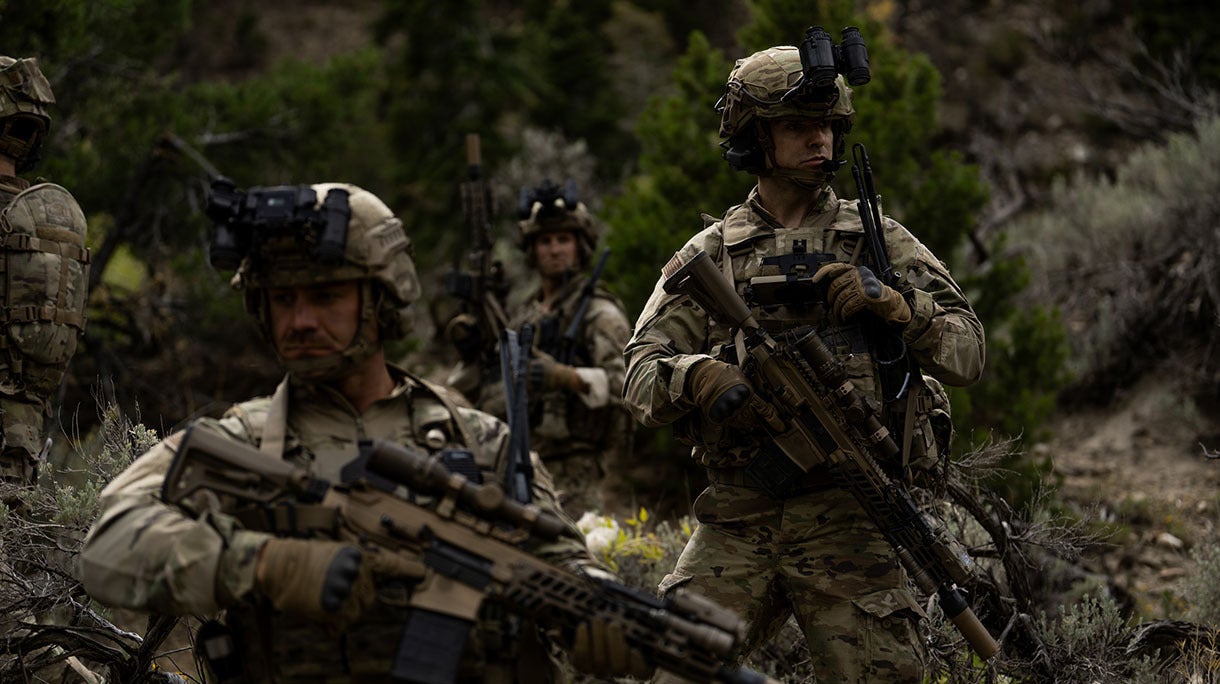
The latest entry into L3Harris’ growing portfolio of C-UAS solutions is the Wraith Shield™ system, a software-only upgrade of the Wraith® waveform that leverages radio-as-a-sensor capability to deliver a sense-and-protect solution for front-line operators to defend against small commercial drone swarms.
“Our Wraith Shield system is the first converged solution available in industry for assured communications and counter-UAS protection at the tactical edge,” said Faisal Munir, President, Mission Critical Communications, Communications & Spectrum Dominance, L3Harris. “Since the Russian invasion of Ukraine, global combat zones have seen a proliferation of drone warfare, adding complexity to strategies and tactics needed to protect borders and front-line troops. Wraith Shield targets smaller, commercial drones – and their drone links – by disrupting their network connections to drop them out of the sky without the use of kinetics.”
L3Harris is partnering with DataShapes AI to provide control capabilities through a body-worn end-user device. DataShapes’ application collects and classifies all radio-frequency data from the networked radios to identify potential threats. Spectrum data is displayed intuitively on the end user device to show where, when and what is being picked up on the RF spectrum. Users can then target specific drone links from their radios to disrupt control connections and take the drones down.
Wraith Shield will be available on the L3Harris RF-9820S/AN/PRC-171 and RF-9820S-ER communications devices later this year and on all Wraith-capable devices early next year.
Resilient, Interoperable Communications – Connecting the C-UAS Nodes
Assured, interoperable communications networking is essential to connect a layered C-UAS system together effectively.
L3Harris has one of the broadest global installed bases of resilient, software-defined communications systems in the industry. Current users of the company’s radios, battle management systems and waveforms can seamlessly leverage the open-system architectures of these solutions to integrate and unify counter-drone ecosystems to respond to their specific threat environments. The Wraith Shield capability, for example, is an enhancement of an L3Harris waveform that instantaneously connects all Wraith waveform-capable devices in a network together as nodes to form a protective bubble against applicable threats.