When people think about space exploration, they picture rockets lifting off, satellites deploying in orbit or astronauts stepping onto distant worlds. What’s less visible, but just as critical, is the communications infrastructure that connects every spacecraft, every crew and every decision made millions of miles away.
From Earth-based command centers to satellites circling the planet, from the International Space Station to the lunar surface and onward to Mars, space missions depend on resilient, adaptable communications systems. These links form the backbone of the modern space economy, enabling data to move reliably across extreme distances and environments where failure is not an option.
One Network, Many Worlds
Space communication is no longer limited to a single orbit or mission type. Today’s environment spans from Earth’s orbit to deep space exploration. Each domain presents its own technical challenges, latency, radiation, thermal extremes, spectrum constraints and the growing complexity of multi-orbit operations.
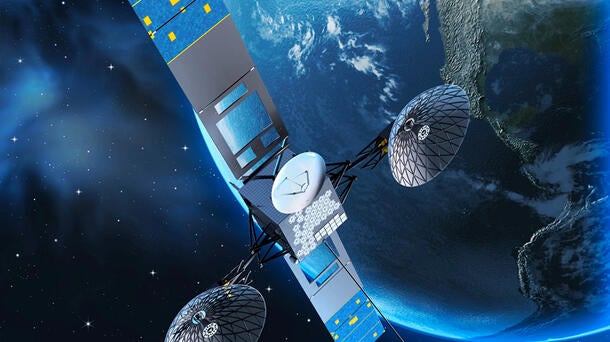
Modern missions must operate across multiple orbits simultaneously. A spacecraft may relay data through other satellites before reaching Earth. Lunar missions will rely on orbital relay networks. Future Mars missions will require systems capable of operating autonomously when Earth is tens of millions of miles away.
In this environment, legacy single-mission radios are no longer sufficient. Communications systems must be modular, multiband and software-defined, engineered to evolve in orbit as mission demands change.
This shift demands communications architectures that are not only reliable, but adaptable. Satellites launched today must support new waveforms, evolving network standards and changing operational concepts, without requiring costly hardware replacement in orbit.
The ability to reconfigure capability through software is no longer a convenience, it is a strategic requirement.
Built on Heritage, Designed for What’s Next
For more than six decades, L3Harris has supported space missions with communications systems designed for long-term reliability. That heritage spans early satellite programs through today’s civil, commercial and national security architectures.
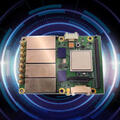
Today, that experience is embodied in the L3Harris C/TT-600 next-generation space radio.
Designed as a modular, multiband software-defined radio, the C/TT-600 supports missions ranging from Earth observation and weather satellites to human spaceflight platforms, lunar infrastructure and future Mars exploration.
Unlike traditional fixed-architecture radios, the C/TT-600 enables in-orbit adaptability, allowing operators to update waveforms, cryptographic parameters and mission configurations through software.
In an environment where servicing hardware may be impossible, that adaptability extends operational life, reduces risk and protects mission investment.
The result is a resilient communications foundation engineered for long-duration missions, evolving standards and multi-domain operations.
From the Ground to Deep Space
On Earth, ground systems act as the nerve center of space operations. Engineers send commands, receive telemetry and monitor spacecraft health around the clock.
In orbit, satellites relay critical information supporting navigation, weather forecasting, global communications and national security. Aboard the International Space Station, resilient communications ensure crew safety and continuous coordination.
As exploration moves outward, complexity increases.
Lunar surface operations must maintain constant connectivity despite harsh radiation and long periods of darkness. Surface vehicles, astronauts and orbiting relay satellites must function as a coordinated network.
Mars pushes the limits further. With communication delays measured in minutes, systems must operate with a high degree of autonomy. Radios must survive extreme environments while intelligently managing bandwidth and prioritizing critical data.
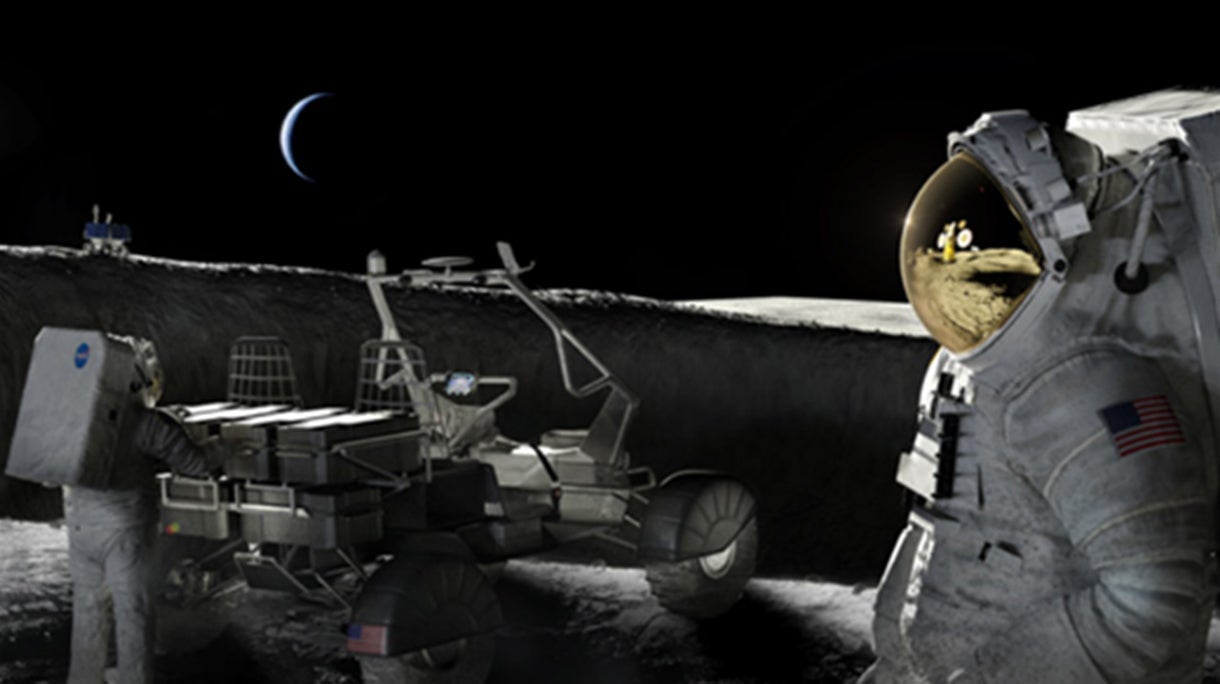
Across every phase of space exploration, from launch and orbit to surface operations and deep space transit, L3Harris communications technologies are designed to maintain secure, reliable links when distance and disruption are inevitable.
Every signal carries navigation updates, scientific discovery or mission-critical instructions. Each transmission must be protected against disruption, interference and failure.
Enabling the Next Era of Exploration
Space is becoming more interconnected, and more contested. Governments, commercial companies and international partners are launching satellites at unprecedented rates. Planned lunar infrastructure and Mars missions will require sustained communications networks, not just single-point links.
Resilient communications infrastructure is what allows this ecosystem to function.
Adaptable, software-driven systems will support emerging standards, enable cross-domain operations and maintain secure, reliable links in increasingly complex environments.
L3Harris is advancing this next-generation architecture today, delivering space-proven, software-defined radios designed to operate across orbits, across domains and across decades.
Behind every successful mission is a communications backbone built on trust, heritage and innovation.
At L3Harris, that backbone is built to evolve, ensuring that as missions expand from Earth orbit to the lunar surface and onward to Mars, the signal remains strong.