Advanced sensing and electronic systems are pushing the boundaries of what is possible, from detecting infrared energy at extended ranges to processing complex data and operating sophisticated instruments in extreme environments.
Many of these capabilities depend on something less visible but equally critical: maintaining sensitive components at precisely controlled cryogenic temperatures.
Infrared sensors, scientific instruments, high-performance electronics and spaceborne payloads may perform very different missions, but each can depend on thermal conditions that conventional cooling systems cannot provide. Linear cryocoolers help create and maintain those conditions while operating within the demanding size, weight, power, vibration and reliability constraints of the larger system.
Thermal Performance Within Real-World Constraints
Achieving cryogenic temperatures is only part of the engineering challenge.
Modern sensors and electronic systems often have limited space, tightly controlled power budgets and stringent mechanical requirements. The cooling system must therefore provide the required refrigeration while integrating efficiently with the surrounding platform.
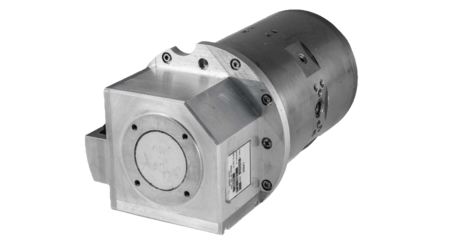
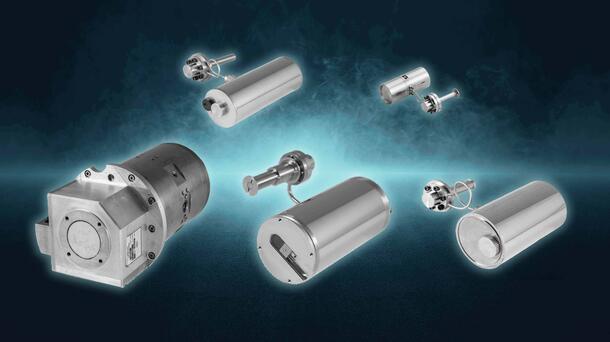
L3Harris linear cryocoolers are engineered to provide controlled cryogenic cooling across a range of system requirements and applications. Multiple cooling capacities, sizes and configurations allow cryocooler solutions to match applications ranging from infrared sensing and precision instrumentation to advanced electronics and spaceborne systems.
The result is more than a cooling source. It is an integrated thermal-management solution designed to enable the performance of the system it supports.
When Staying Cool Means Staying Still
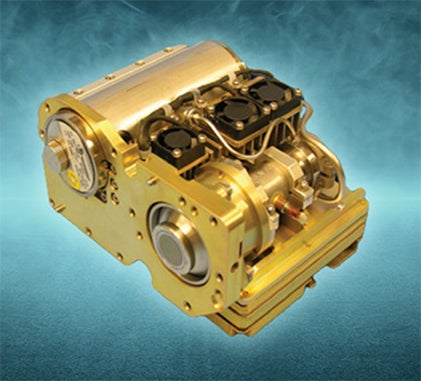
Mechanical cooling equipment inherently generates motion. For highly sensitive sensors and precision optical systems, even small amounts of transmitted vibration can affect performance.
Linear cryocoolers must therefore balance two requirements: delivering the necessary cooling capacity while minimizing mechanical disturbances transmitted into the surrounding system.
L3Harris linear cryocoolers are designed with vibration-sensitive applications in mind, helping provide stable cryogenic cooling while limiting transmitted vibration. This capability is particularly important for infrared imaging and precision optical systems where maintaining line-of-sight stability is crucial system performance.
One example is the L3Harris Night Conqueror HD™ sensor system, which incorporates the B602™ linear cryocooler to provide stable, efficient cooling for its infrared imaging sensors during demanding low-light and no-light operations.
Cooling Is a System-Level Challenge
Temperature and vibration are not the only considerations.
Power availability, control architecture and temperature stability must also be addressed in the overall system design. Optional cooler drive electronics provide cryocooler control and precise temperature regulation while supporting efficient power management.
This system-level approach is critical because successful thermal management is not simply about reaching a target temperature. The cryocooler must deliver the required thermal performance while operating within the platform's electrical, mechanical and operational constraints.
That balance becomes increasingly important as sensors and electronics become smaller, more powerful and more capable.
Engineered for the Long Haul
Mission-critical technologies may be required to operate continuously or for extended periods in demanding environments. Their thermal-management systems must be designed with those operating conditions in mind.
L3Harris cryocoolers are engineered for continuous-duty operation and long-life reliability, building on experience supporting fielded applications across infrared imaging and surveillance, airborne and spaceborne systems, advanced electronics and scientific instrumentation.
Although those applications differ significantly, the cryocooler's fundamental role remains consistent: establish and maintain the thermal conditions sensitive technologies need to perform as intended.
Enabling The Next Generation
The performance demands placed on advanced sensors and electronics continue to increase.
Future systems will require greater sensing capability, higher levels of processing, smaller form factors and improved efficiency, often while operating in increasingly challenging environments. Those advances will place equally demanding requirements on the technologies that enable them.
Cryogenic thermal management will remain an important part of that equation.
By combining precise cooling, compact architectures, vibration-conscious design, temperature control and long-life operating capability, L3Harris linear cryocoolers help provide the thermal foundation advanced systems need to perform their missions.
Enabling the next generation of technology starts with creating the conditions for it to perform.