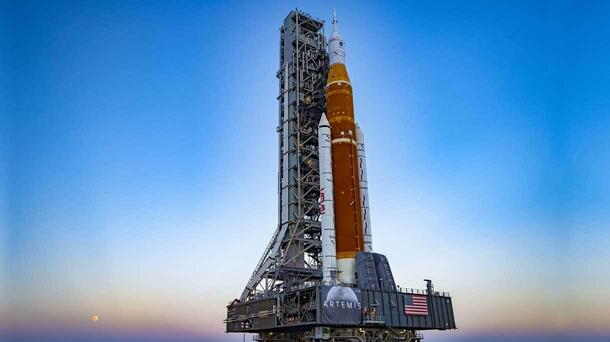
When Artemis II launches, currently targeted for early 2026, it will mark the first human journey around the moon in over 50 years. The Space Launch System (SLS) will generate the immense thrust needed to send Orion and its crew toward lunar orbit, but the mission’s success also depends on the high-reliability avionics hardware embedded throughout the rocket.
Developed by L3Harris, in support of Boeing, these flight-critical electronics handle sensing, control, sequencing, data handling and power distribution functions that allow one of the world’s most complex launch vehicles to operate as a coordinated system.
What These Avionics Do Across the SLS
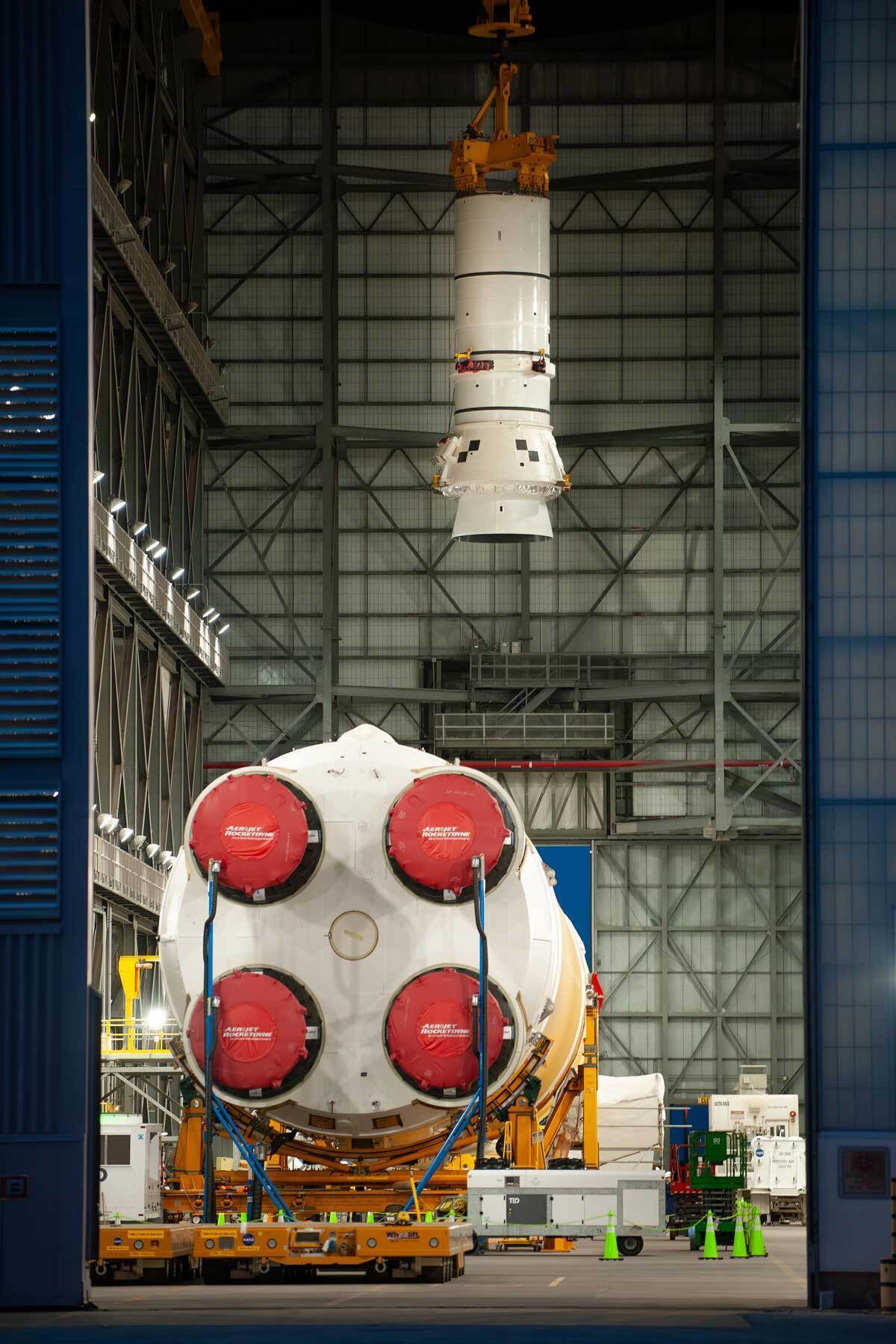
The SLS is built from several major elements: the core stage, solid rocket boosters and the Interim Cryogenic Propulsion Stage, each with its own propulsion, structural and thermal demands. To fly as a single rocket, those elements have to work in lockstep. Integrated with Boeing’s avionics suite, the avionics provided by L3Harris help make that possible, supporting coordinated operation across the vehicle by handling data, routing electrical power and providing the command interfaces that allow the SLS to act as one integrated system.
As the rocket climbs away from the launch pad, these electronics continuously gather temperature, pressure, vibration and load data from across the vehicle. That information is fed to onboard and ground systems while electrical power is distributed to the propulsion and computing systems that must remain active every second of ascent. Built to operate alongside cryogenic propellants and endure extreme vibration, acoustic and thermal environments, the avionics deliver the steady, predictable performance required at every phase of flight.
How They Enable Critical Operations
From the moment of liftoff, the SLS depends on a steady flow of information to stay on course. During ascent, the avionics developed by L3Harris support the data handling and interfaces that provide continuous vehicle health and status information to both onboard and ground systems. Not only is that telemetry collected, but it is also transmitted wirelessly to the ground over radio frequency links, providing real-time insight for teams on Earth. That shared view allows NASA’s flight computers to monitor performance and make precise adjustments as the rocket climbs toward space.
Equally critical is timing. The sequencing functions supported by these avionics help ensure that major events, engine start, solid rocket booster separation, upper-stage ignition and more happen in the correct order and at exactly the right moment. In a human-rated launch vehicle, there is no room for mistimed transitions. These electronics help deliver the precise coordination and reliability required for a safe and controlled ascent.
Reliability for a Crewed Ascent
For the Artemis II astronauts, reliability is mission-critical. The avionics support a stable and controlled flight path by providing the interfaces, sensing data and power management required to maintain guidance support, detect anomalies and keep essential systems operating throughout the climb to orbit. They help ensure that power remains continuous, that flight control signals reach their destinations without interruption and that stage transitions occur cleanly and on schedule. From ignition through orbital insertion, these electronics contribute to the stability, predictability and safety the crew depends on.
The Quiet Work Behind an Extraordinary Mission
When the world watches Artemis II rise from the launch pad, the focus will be on the rocket’s power and the crew entrusted with the journey. Yet inside the vehicle, the avionics engineered by L3Harris will be performing thousands of tasks, collecting data, routing signals, stabilizing the vehicle, sequencing events and enabling the SLS to function as a single integrated system.
Designed, built and rigorously tested by our teams in Mason, Ohio, these electronics may be unseen, but they are fundamental to every phase of the launch. Their precision and reliability make human exploration possible, ensuring Artemis II can deliver its crew safely into space and one step closer to returning humanity to the moon.