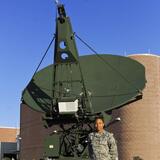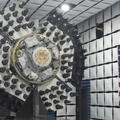
U.S. Space Force declares operational acceptance of an upgrade to the L3Harris’ Ground-based Electro-Optical Deep Space Surveillance (GEODSS) system at the Maui Space Surveillance Complex—marking a decisive step forward in strengthening the nation’s ability to defend critical space assets in an increasingly contested domain.
This milestone confirms Ground-Based Optical Sensor Sensor (GBOSS) is ready to deliver timely, high-fidelity space intelligence directly to Space Force operators, enabling faster decision-making, improved threat detection, and greater protection of satellites that underpin military operations and daily life on Earth.
As adversaries expand counter-space capabilities and orbital congestion accelerates, GBOSS provides warfighters with the precision tracking and characterization needed to maintain space superiority—detecting, identifying, and monitoring objects in deep space with unprecedented accuracy.
"GBOSS delivers exactly what today's warfighters need: faster, more precise awareness in a domain where seconds matter," said Jeff Hanke, President of Space Systems, Space and Mission Systems, L3Harris. "This capability strengthens America’s ability to deter threats, protect vital space infrastructure, and ensure mission continuity for forces and citizens who rely on space every day."
Sharpening America's Vision in Space
GBOSS replaces the legacy GEODSS sensors with advanced optical technology that dramatically improves sensitivity, responsiveness, and tracking accuracy. The upgrade is critical as space transitions from a permissive environment to an active warfighting domain.
From missile warning and intelligence collection to secure communications, navigation, and weather monitoring, space systems are foundational to joint force operations. GBOSS ensures those systems remain resilient, protected, and operational—even as threats grow more sophisticated.
Global Coverage, Persistent Advantage
Following operational acceptance at White Sands Missile Range and successful contractor verification testing at Maui demonstrates consistent execution across the global GEODSS network.
Together, these sites provide persistent, worldwide deep-space surveillance, enabling operators to rapidly identify anomalies, avoid collisions, and respond to emerging threats—protecting billions of dollars in space infrastructure and safeguarding the missions that depend on it.
With GBOSS, L3Harris is delivering more than a sensor upgrade—it is delivering a decisive operational advantage for America’s space defenders.