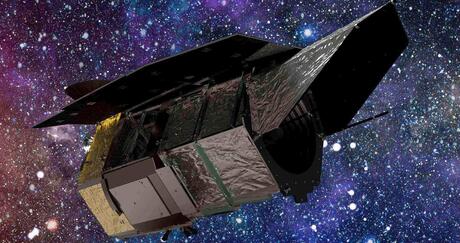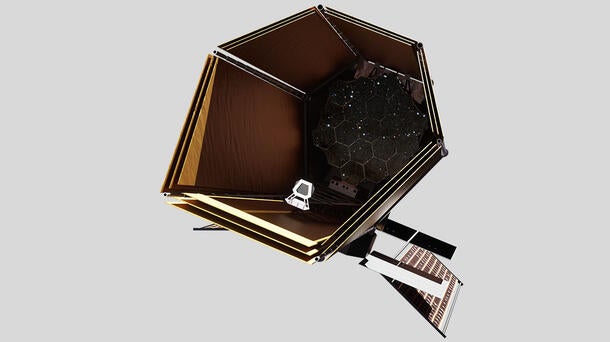
L3Harris Technologies Inc. has secured a contract from NASA to develop critical technology for the Habitable Worlds Observatory (HWO), a flagship deep space telescope designed to detect signs of life on distant planets.
L3Harris is one of seven firms awarded three-year, fixed-price contracts to advance technologies for this ambitious mission. The company will conduct the work in Rochester, NY, and focus on demonstrating thermal and optical stability technologies critical to achieving the picometer stability that the telescope requires.
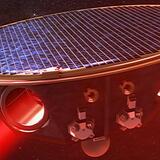
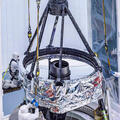
Building upon L3Harris’ best-in-class thermal control system from the Optical Telescope Assembly for the Nancy Grace Roman Space Telescope, the company will continue developing more advanced technologies to enable a picometer-level thermally stable telescope. A picometer is a unit of measurement smaller than an atom and maintaining stability at this scale means preventing even the tiniest temperature-induced movement. This telescope must stay extremely steady to detect dim light from faraway space objects and identify chemical clues for habitability or life such as water vapor, molecular oxygen, ozone and methane.
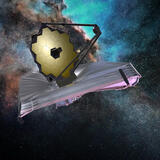
"Achieving unprecedented stability in space represents one of the most demanding engineering challenges ever attempted," said Charles Clarkson, Vice President and General Manager of Space Superiority & Imaging, L3Harris. "Drawing on our legacy of contributions to groundbreaking deep space missions like James Webb Space Telescope and the Roman Space Telescope, L3Harris has the proven capabilities in advanced optics and space systems to help NASA push these boundaries and deliver transformative science."
The HWO will be built specifically to find extrasolar planets capable of supporting life, requiring extraordinarily precise spectral measurements light years away.
For L3Harris, this contract represents participation in one of humanity's most challenging endeavors. This mission will be a unique opportunity to develop a telescope of unprecedented accuracy to search for life beyond our solar system.