NASA launch and re-entry events demand precise coordination and clear understanding of vehicle behavior to ensure the safety of crews, recovery teams and critical flight hardware. L3Harris’ WESCAM MX-Series electro-optical/infrared (EO/IR) systems provide the persistent situational awareness required to support mission assurance during these high-consequence operations.
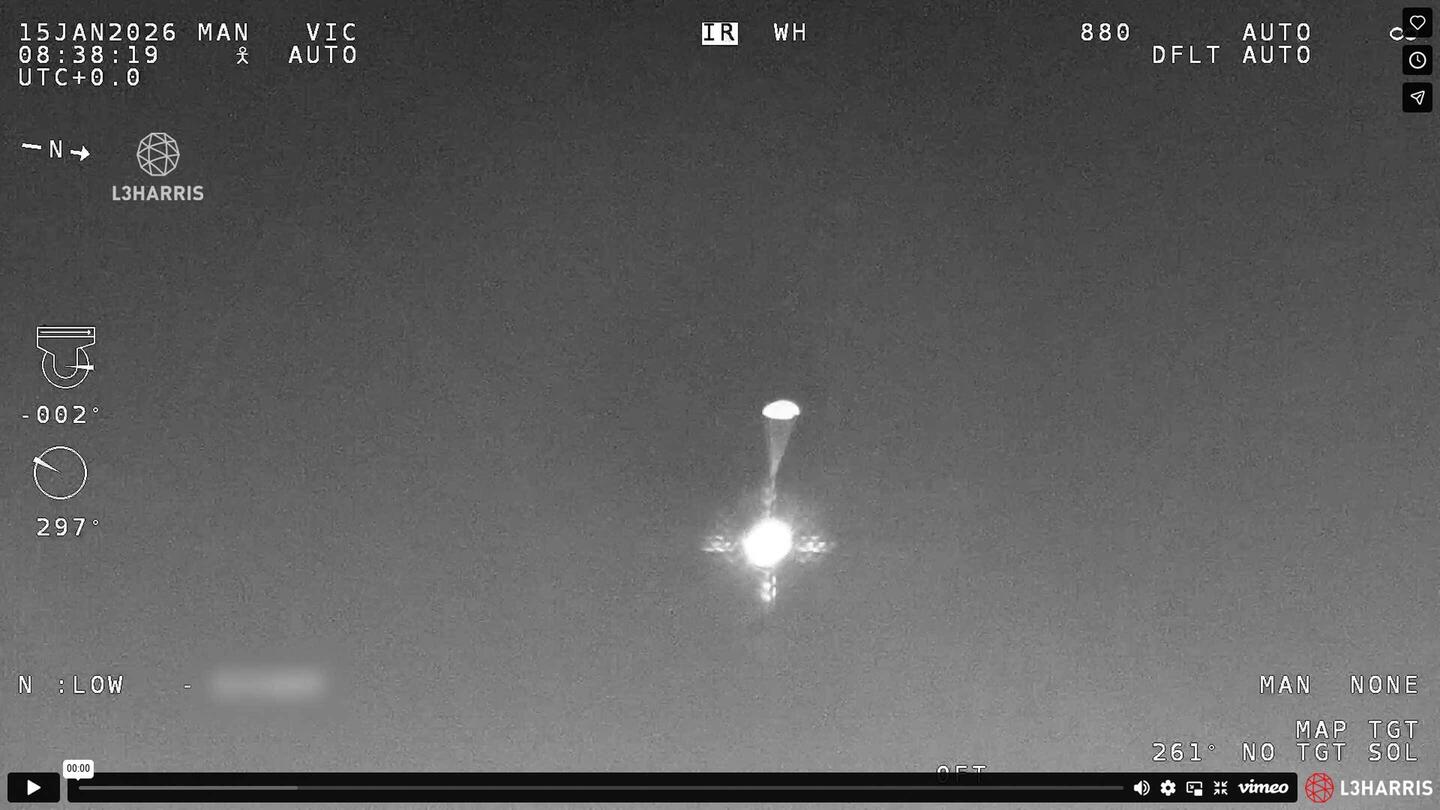
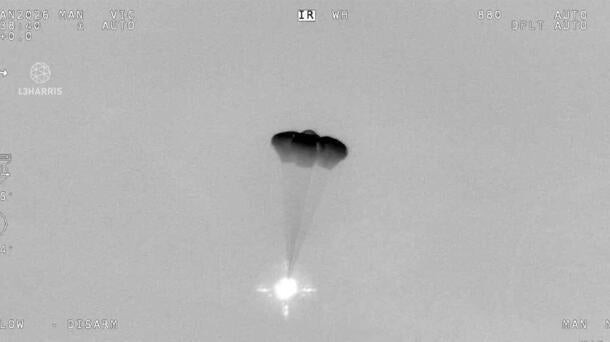
Under contract with NASA, L3Harris supports multiple launch and re-entry missions with the majority of operations focused on the re-entry of Dragon capsules off the coast of California. WESCAM MX-Series systems deliver live full-motion video (FMV) of key mission phases during these events, including parachute deployment sequences and the capsule’s descent through splashdown.
The highly stabilized EO/IR imagery enables NASA teams to closely observe the deployment and inflation of both drogue and main parachutes in real time. This visibility is essential to assessing parachute performance, descent stability and overall system effectiveness — factors that directly impact the safe recovery of spacecraft and crew. By capturing imagery from multiple perspectives and significant ranges, NASA engineers gain a comprehensive view of the event, supporting both real-time decision-making and detailed post-mission analysis.
To meet NASA’s requirement for a flexible and cost-effective airborne imaging solution, L3Harris operates a Cessna Grand Caravan equipped with WESCAM MX-20 and MX-15 EO/IR sensors. This platform allows NASA to position imaging assets at tailored altitudes and stand-off distances, complementing other airborne and maritime sensors supporting the recovery operation. The WESCAM MX-Series’ long-range, high-resolution optics and advanced stabilization ensure continuous tracking of the vehicle throughout the most dynamic phases of re-entry.
“The value of WESCAM systems is the reliability and visibility they provide,” said Tom Kirkland, President, Targeting and Sensor Systems, Communications and Spectrum Dominance, L3Harris. “They allow NASA teams to clearly see and understand what’s happening during re-entry, such as the integrity of capsule parachutes, which is critical to protecting crews, recovery personnel and mission assets.”
In addition to Dragon capsule recoveries, WESCAM MX-Series systems have supported other NASA programs, including the Starliner mission in 2024 and the Artemis II Space Launch System (SLS) launch in March 2026. Across these events, the sensors have delivered consistent, actionable imagery that supports mission execution, safety assessments and system validation.
Designed for persistent surveillance and precision tracking, WESCAM MX-Series EO/IR systems continue to demonstrate their effectiveness in aerospace and spaceflight applications. Through its support of NASA launch and re-entry operations, L3Harris provides trusted sensing technologies that enhance situational awareness, support mission assurance and help ensure the safe return of people and equipment from space.