The proliferation of drone warfare in combat zones around the world has created a dynamic shift in military strategy and tactics to provide protection to both national borders and troops defending them.
The breadth of unmanned systems within adversarial inventories presents an added challenge when warfighters must contend with both sophisticated, large unmanned aerial systems (UAS) as well as attritable, commercial drones deliberately weaponized for one way attack missions against personnel and critical assets.
A single air defense system simply cannot contend with every single drone threat in an area of operation – nor is it feasible to deliver the same kinetic effect for a large unmanned system as a first-person view (FPV) drone costing a few hundred dollars. A layered posture to defeat unmanned threats is required to cost-effectively defend against this new form of warfare.
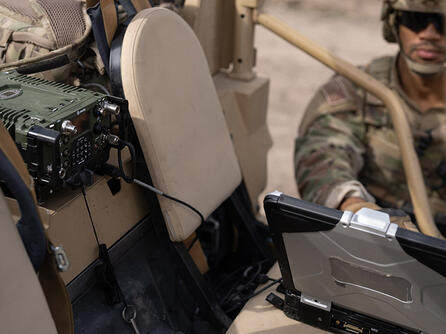
To meet this critical need, warfighters operating in forward deployed environments will soon have access to L3Harris Technologies’ Wraith Shield™ software – a capability that turns existing tactical radios widely fielded across U.S., NATO, Five Eyes and allied forces into mobile, artificial intelligence (AI)-enabled radio frequency sensing and effects platforms that serve as a shield against small drone attacks.
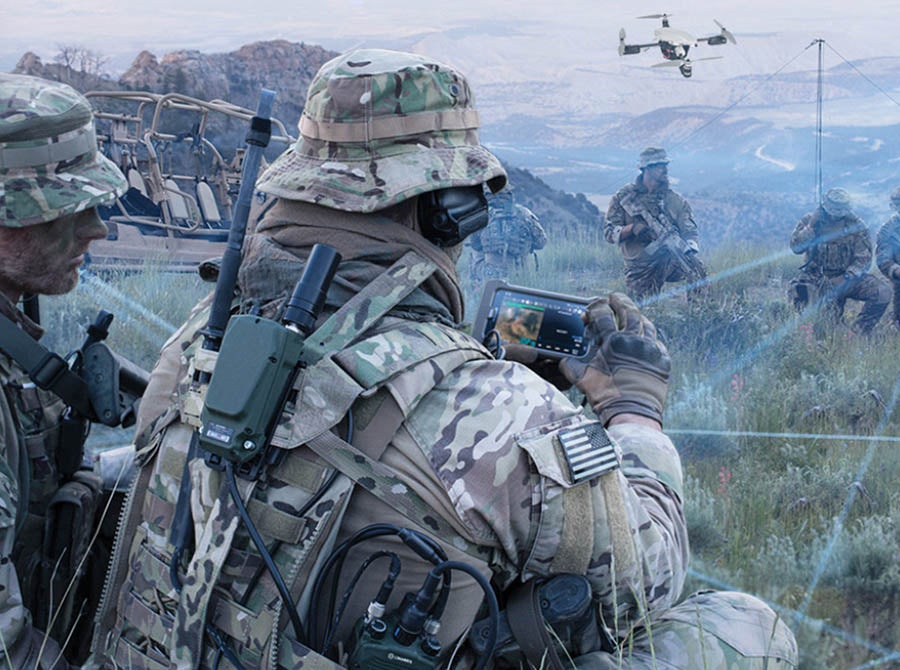
“Wraith Shield is a prime example of how L3Harris continues to innovate as the Trusted Disruptor in the market,” said Chris Aebli, President, Mission Critical Communications, L3Harris. “It enables operators to disrupt hostile drone signals directly from their radios. With the press of a button, personnel can neutralize attritable unmanned systems, causing them to drop from the sky.”
L3Harris developed the Wraith® waveform – the first wideband, fast frequency-hopping tactical waveform – in the early 2020s, and it is fielded today in operations where users’ communications face sophisticated electronic warfare attacks. As an enhancement to the Wraith waveform, the company’s Rapid Prototyping Group began development of the Wraith Shield upgrade last year to counter adversaries’ ability to deploy smaller, commercial drones to attack targets of interest.
The Wraith Shield capability will be deployed on the RF-9820S Compact Team Radio – also known as the AN/PRC-171 – and its embeddable version, the RF-9820S-ER, later this year. It will also be available as a future software upgrade on all Wraith-capable tactical radios – including the 100,000-plus systems fielded by militaries today, such as the AN/PRC-158C, AN/PRC-163 and AN/PRC-167.
A Converged Solution for Layered Air Defense
With the addition of AI-enabled radio frequency (RF) sensing, the Wraith Shield capability delivers a radio-as-a-sensor capability that integrates into distributed, data-centric networks – a first for the market, according to Rob Mariuz, Director, Product Management, L3Harris.
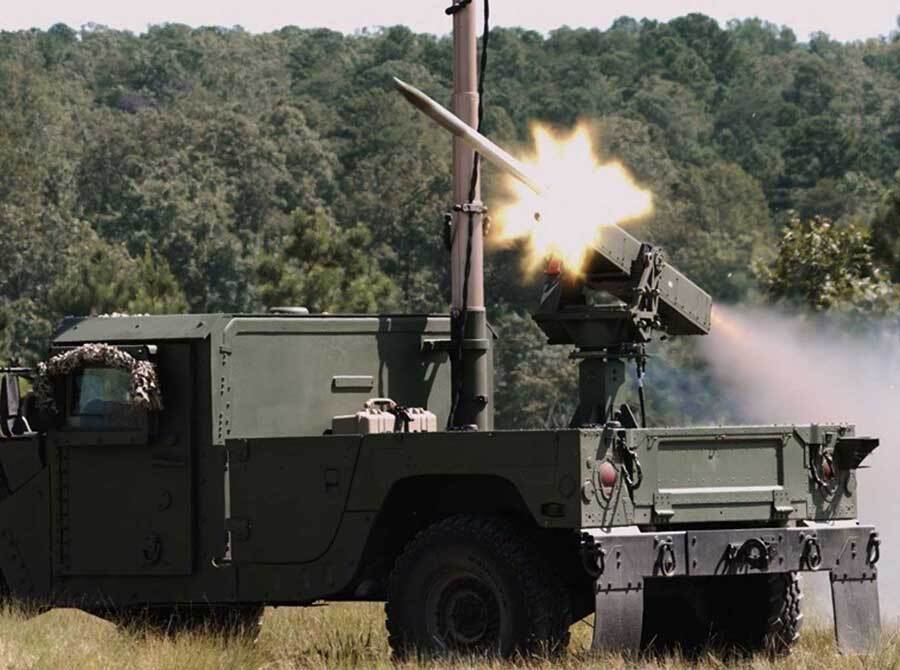
“Our role as an industry partner to U.S. and coalition forces is to protect ground operators and provide the most reliable, secure and assured communications,” said Mariuz. “Our new Wraith Shield capability has been designed to seamlessly integrate with and enhance existing air defense systems by adding thousands of distributed sensors.”
The Wraith Shield software can be used as a stand-alone capability to protect against drone threats using commercial command links. It is also designed to be directly integrated with other counter-UxS systems in a customer’s arsenal, providing a layered system of air defenses in which the Wraith Shield capability can target smaller drones by disrupting their functionality while more elaborate capabilities, such as VAMPIRE™ and Drone Guardian® counter-UAS systems, can focus on larger threats.
Visualizing the Small Drone Threat Environment
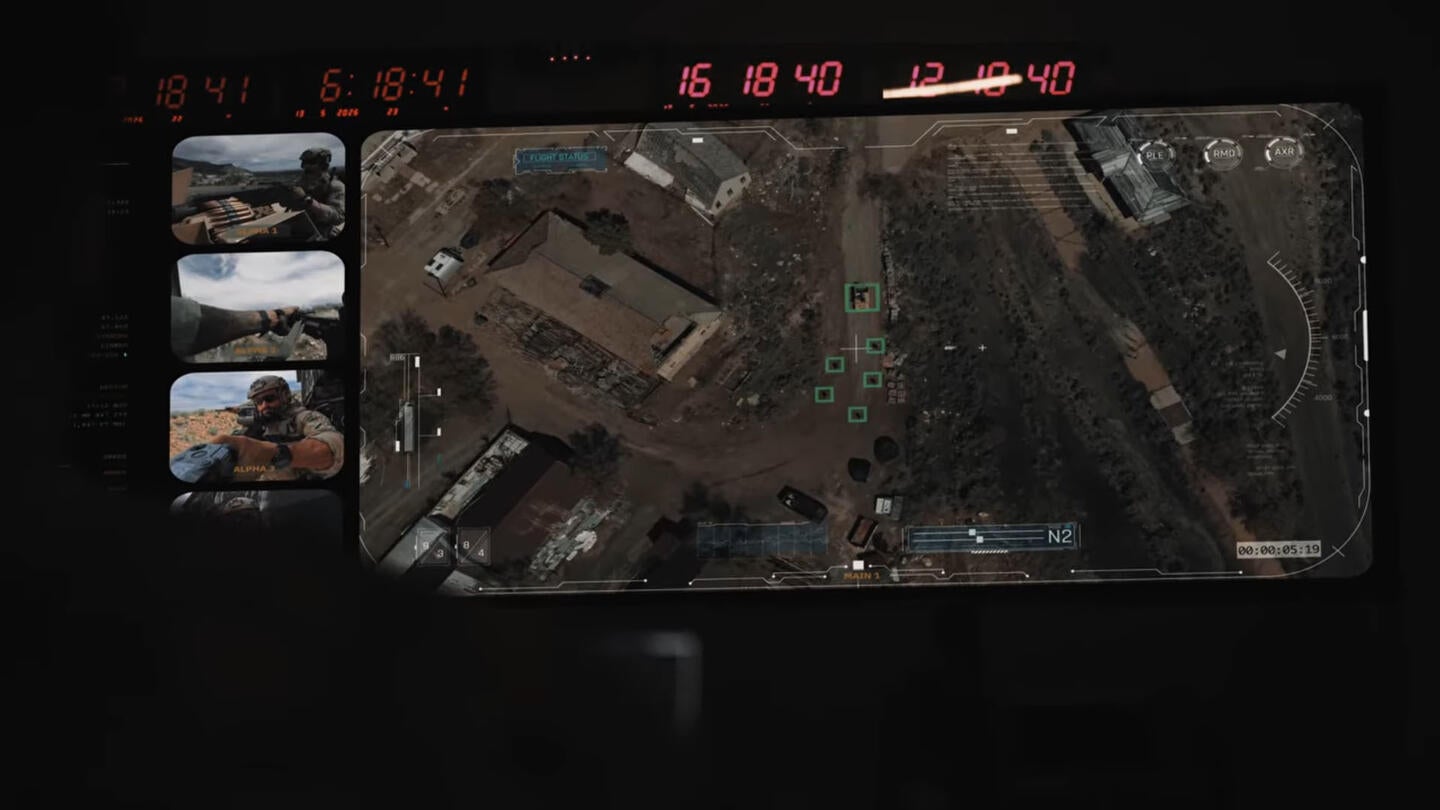
To complete the Wraith Shield system, L3Harris worked with DataShapes AI, a company that delivers edge-native AI for electromagnetic spectrum awareness. Together, they created a visualization system so users can actively see potential threats in the electromagnetic spectrum of their local area.
The DataShapes AI’s GlobalEdge platform transforms distributed RF data into real-time, actionable intelligence to enable warfighters to detect, classify and respond to threats directly at the tactical edge without reliance on centralized infrastructure.
Through DataShapes AI’s software, RF data from connected devices is classified and displayed on an end-user device so soldiers can easily identify what is flying above them and instantaneously target potential threats.
“This capability closes the gap between sensing and action in a way that directly impacts survivability on the battlefield,” said Paul Craft, President of DataShapes AI and former U.S. Army Chief of Cyber and EW. “By delivering clear, real-time visibility of the electromagnetic environment to the tactical edge, we are giving warfighters the situational awareness and – most importantly – the speed they need to see-sense-shoot and outpace adversaries in increasingly complex and contested environments.”
A Novel Approach to Counter-UAS
When connected to Wraith-capable devices, the Wraith Shield capability, with DataShapes AI software, delivers a distributed sense-and-protect solution that can feed information into Command, Control, Communication, Computers, Cyber, Intelligence, Surveillance and Reconnaissance (C5ISR) applications, including MissionOps™ tactical network management or hC2™ battle management suites.
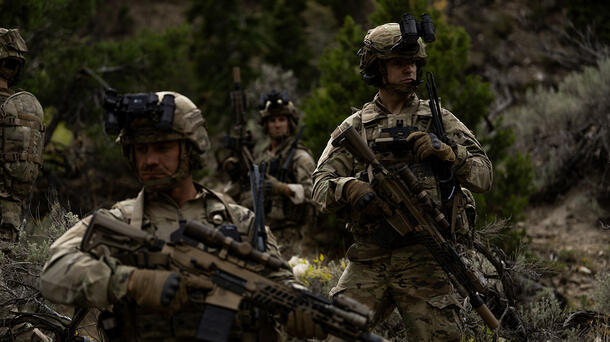
“It brings sensors to the front line and the tactical edge, because the soldiers already have the body-worn communications systems,” said Tom Sheehan, Lead, Product Management, L3Harris. “Further, the frequency bands are very important. The RF-9820S supports operation in the same frequency bands commonly used by most attritable FPV drones. The soldiers who would benefit most from Wraith Shield already carry the equipment needed to use it.”
With the Wraith Shield capability, L3Harris is redefining what a tactical radio can deliver. The capability, built on battle-proven assured communications systems and software-defined architectures, enables sensing and protection where it matters most – at the tactical edge. The scalable, fully integrated Wraith Shield strengthens layered defense ecosystems and keeps warfighters connected and protected in increasingly complex battlespaces.