7 Ways American Innovation Changed the Mission Forever: From Breakthroughs to Battlefield Edge

CH
Corporate Headquarters
Jun 25, 2026 | 2 MINUTE Read
Logos of L3Harris and America250

For 250 years, American innovation has changed more than everyday life. It has changed what missions are possible. 

From powered flight and lunar exploration to telecommunications and digital networking, breakthrough ideas born in the United States reshaped how the world moves, connects, builds, explores and defends. 

Today, that legacy lives on in the technologies that help make missions faster, smarter, more connected and more resilient. 

1. Powered Flight

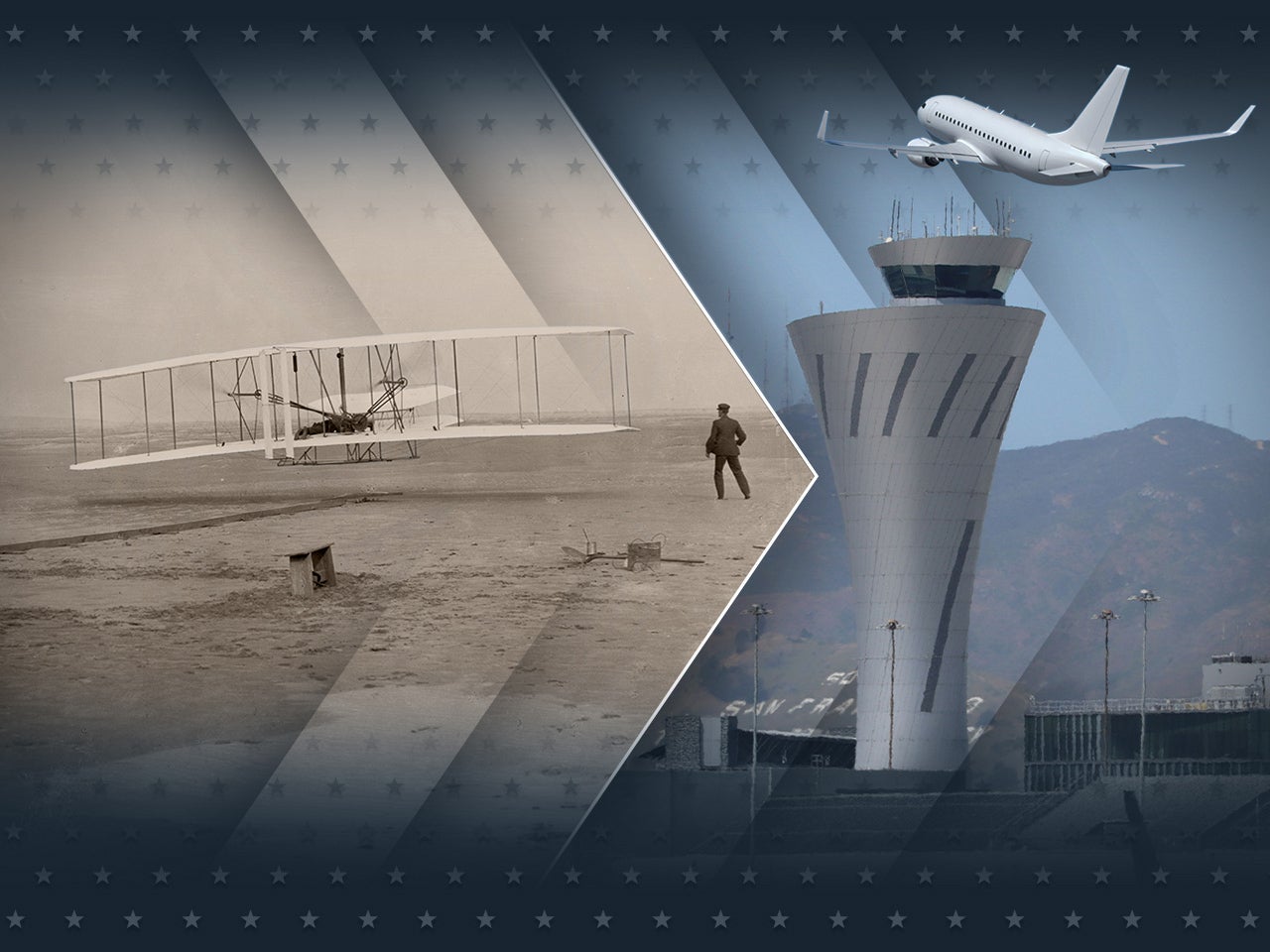
Combined graphic of Kitty Hawk plane and a modern air control tower

From Kitty Hawk to Modern Airspace Connectivity

THEN

In 1903, the Wright brothers achieved the first powered, controlled flight in Kitty Hawk, North Carolina – a breakthrough that changed the course of history. What began as a fragile experiment in lift, balance and propulsion quickly opened an entirely new era of transportation, mobility and strategic reach. Powered flight collapsed geography, accelerated commerce and transformed how nations projected presence and power.

NOW

Today, flight is about far more than getting off the ground. Modern aviation depends on resilient communications, precise navigation, real-time information exchange and the infrastructure that keeps aircraft safely connected from departure to arrival. L3Harris helps power that evolution through its work on the Federal Aviation Administration's Telecommunications Infrastructure (FTI), modernizing the telecommunications backbone that supports the National Airspace System. By upgrading the networks that enable voice, data and operational coordination across thousands of sites, L3Harris is helping strengthen the connectivity, reliability and efficiency behind every flight. It’s a reminder of how far powered flight has come, from the first successful takeoff to a complex, interconnected aviation ecosystem built to move safely at scale.

2. The Moon Landing

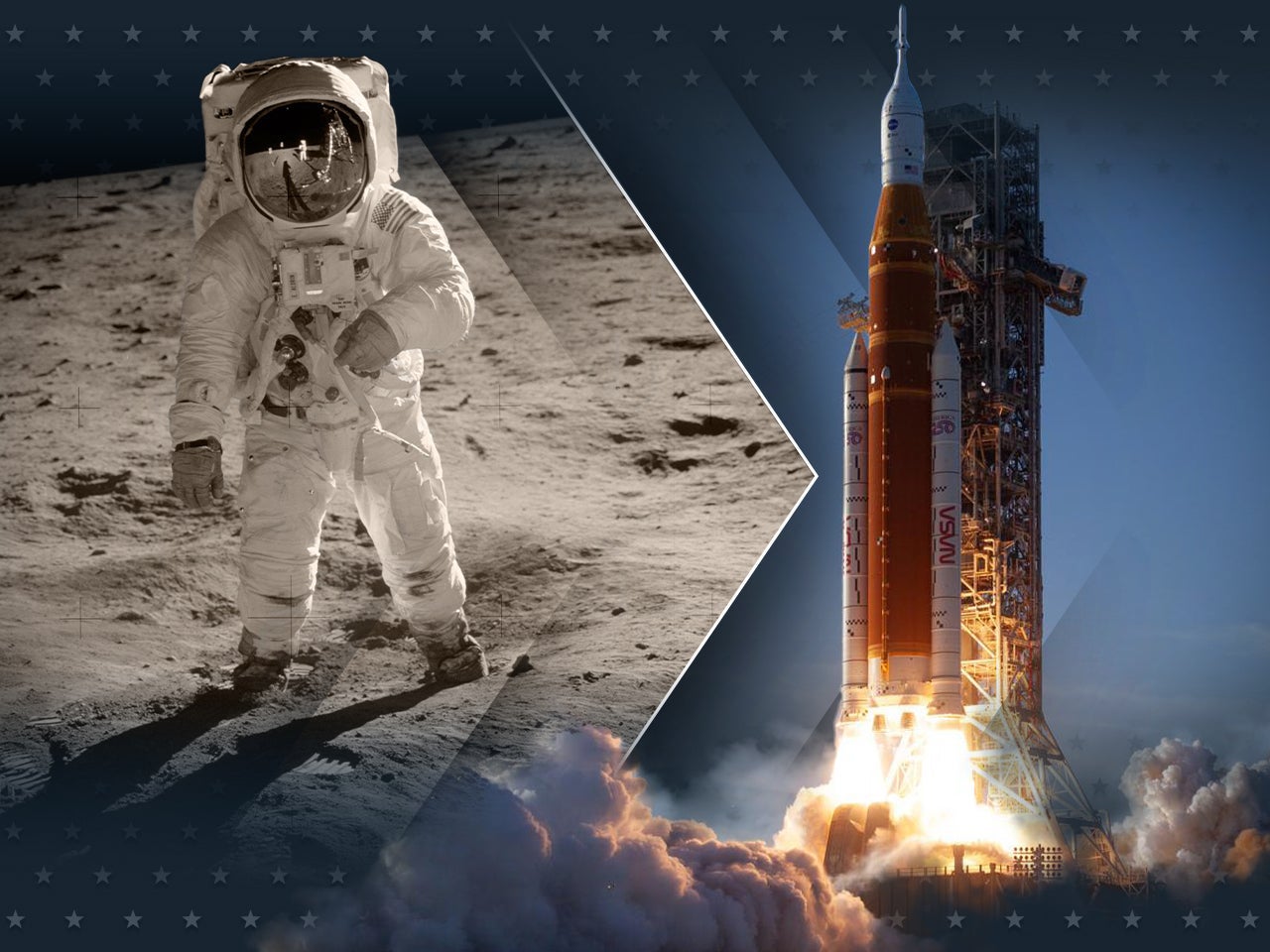
Combined image of walking on moon and artemis launching

From One Giant Leap to a New Space Era

THEN

The Apollo program demonstrated what American ingenuity could achieve when ambition met engineering excellence. In 1969, the United States landed humans on the moon, accomplishing one of the most complex technical feats in history. The mission required advances in communications, guidance, propulsion, computing and systems integration. It redefined what was possible in space.

NOW

Today, America’s next great space mission is Artemis, a collaborative effort bringing together NASA, L3Harris and other industry partners to return humans to the moon and prepare for future missions to Mars. Building on the legacy of Apollo, Artemis demonstrates how modern space exploration depends on integrated propulsion, communications, avionics and mission systems. L3Harris contributes more than 100 separate elements to the program, including the RS-25 engines that power NASA’s Space Launch System. Together, these technologies are helping turn space exploration from a single historic milestone into a sustained campaign to explore deeper into space, beginning with the moon and extending onward to Mars.

3. Maritime Mobility

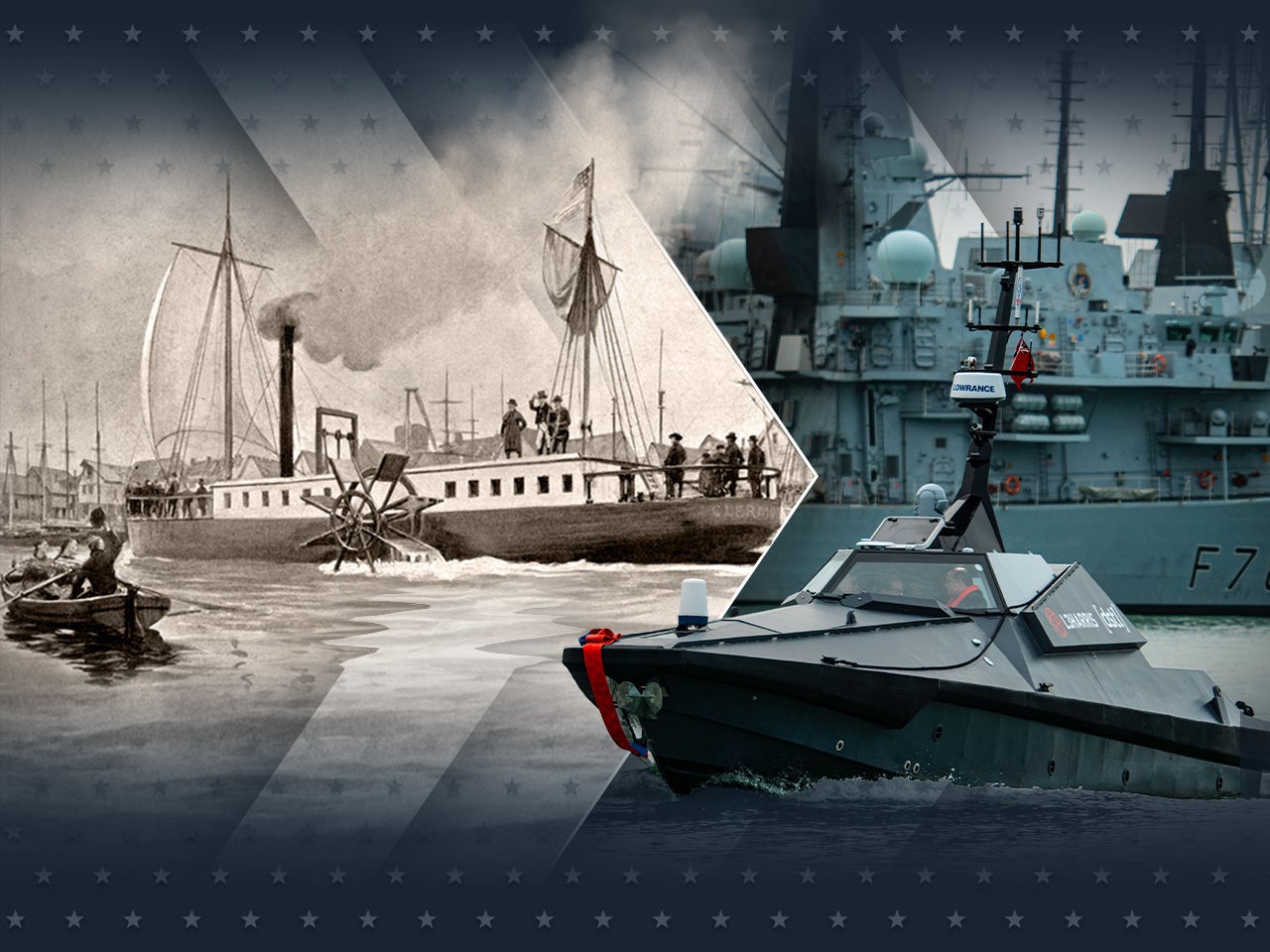
Archive image of steamer ship with a modern L3Harris ship

From Steam Power to Smarter Seas

THEN

When American engineer Robert Fulton’s steamboat proved commercially viable in the early 19th century, it transformed movement on America’s waterways. Steam power made river travel faster, more reliable and less dependent on natural currents, expanding trade, mobility and industrial growth. It was one of the clearest examples of technology reshaping how a nation moved across distance.

NOW

Today, maritime innovation depends on more than propulsion alone — it depends on intelligent platforms built for reach, persistence and adaptability. Where Fulton’s steam power transformed movement on the water’s surface, L3Harris is helping drive the next leap forward with Shadow Fox, a high-speed autonomous surface vehicle designed for prolonged beyond-line-of-sight operations. With the ability to support multiple payloads, relay critical information and operate independently or as part of a swarm, Shadow Fox expands what is possible across the maritime domain. By advancing persistent, autonomous operations on the surface, L3Harris is helping redefine maritime mobility for a new era.

4. The Telephone

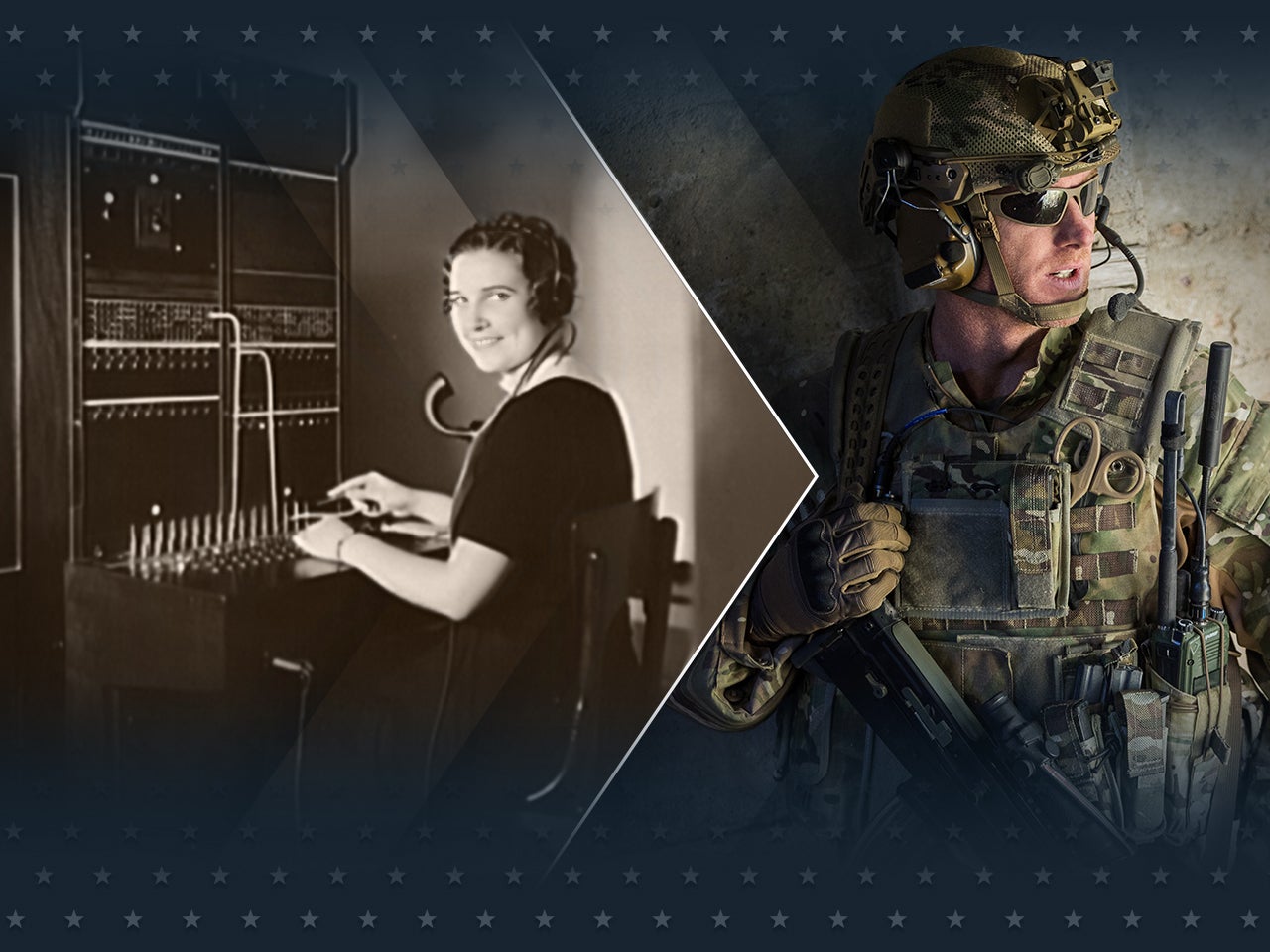
Archive image of woman with early telephone and soldier on radio

From the First Call to Mission-Critical Connectivity

THEN

Alexander Graham Bell’s telephone changed communication forever by allowing people to speak across distance in real time. The invention compressed distance, accelerated decision-making, and altered business, government and daily life. For the first time, connection was immediate – not delayed by travel or written correspondence.

NOW

In modern missions, communication is more than convenience—it is coordination, command, mission continuity and personnel safety. Voice, data and video must move securely across dispersed teams operating in complex environments to deliver critical situational awareness. L3Harris enables that mission through assured software-defined data transport nodes for military and public safety users, providing secure, adaptable communications when it matters most. 

From the first telephone call to today’s mission-critical networks, connectivity has become essential to how America operates, responds and stays connected in real time.

5. The Internet / ARPANET

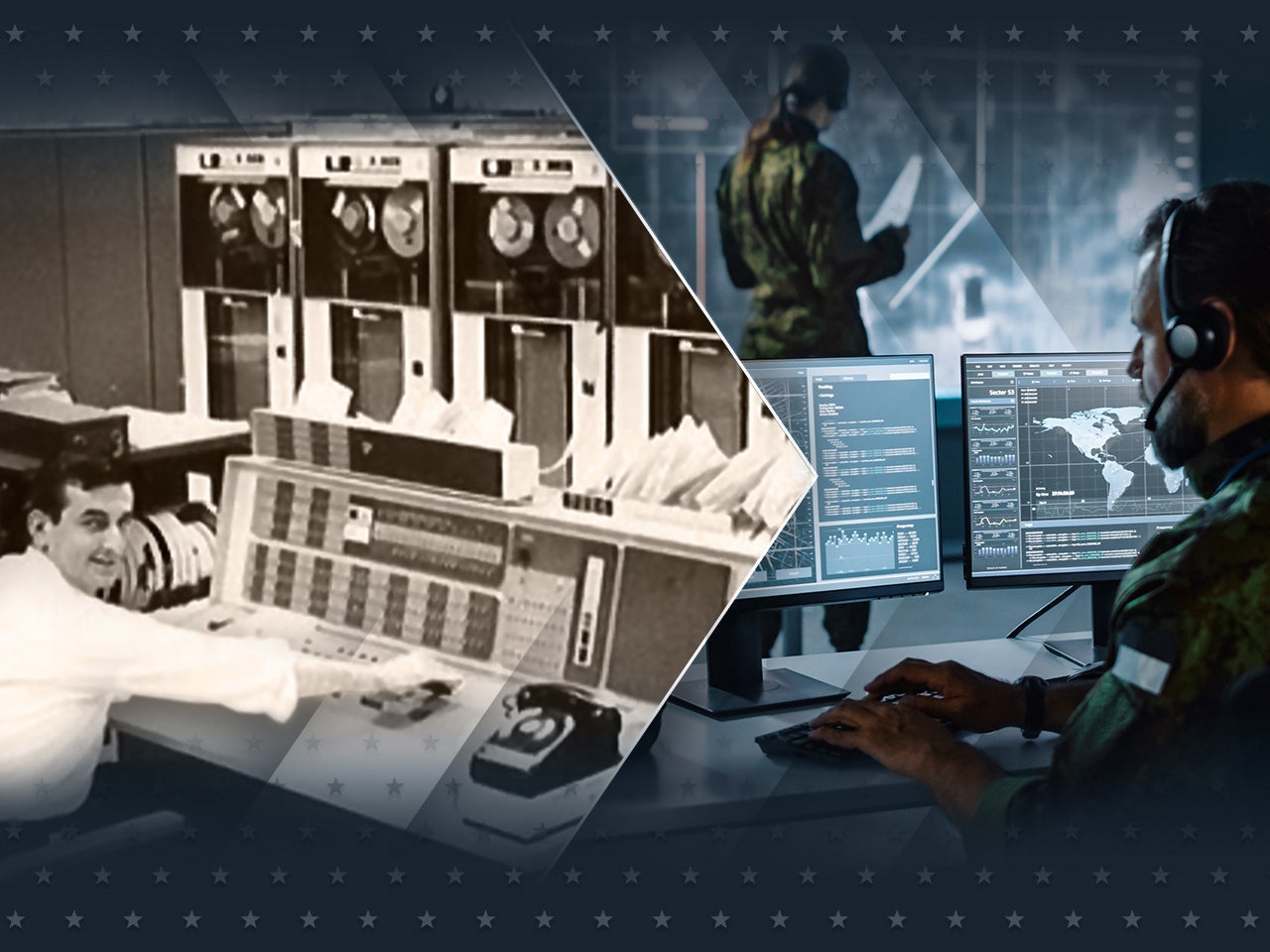
archive image of man at desk with technology and soldier on modern computer system

From Early Networks to the Speed of Decision

THEN

ARPANET, an American research effort backed by the U.S. Department of War in the 1960s, introduced a new model for sharing information across distributed systems. That breakthrough laid the foundation for the internet and fundamentally changed how people access knowledge, communicate and collaborate. It marked the beginning of a networked world.

NOW

Today, networks do more than connect people – they enable the secure flow of information that powers modern missions. L3Harris advances that mission with capabilities such as high-assurance communications, designed to help protect data, strengthen resilience and support trusted operations across complex environments. L3Harris also brings that resilience to hybrid SATCOM, helping deliver global internet connectivity at the tactical edge through a mix of military and commercial satellite networks, including commercial LEO constellations such as Amazon’s. What began with ARPANET has evolved into a world where secure, agile connectivity underpins mission success. 

6. Manufacturing at Scale

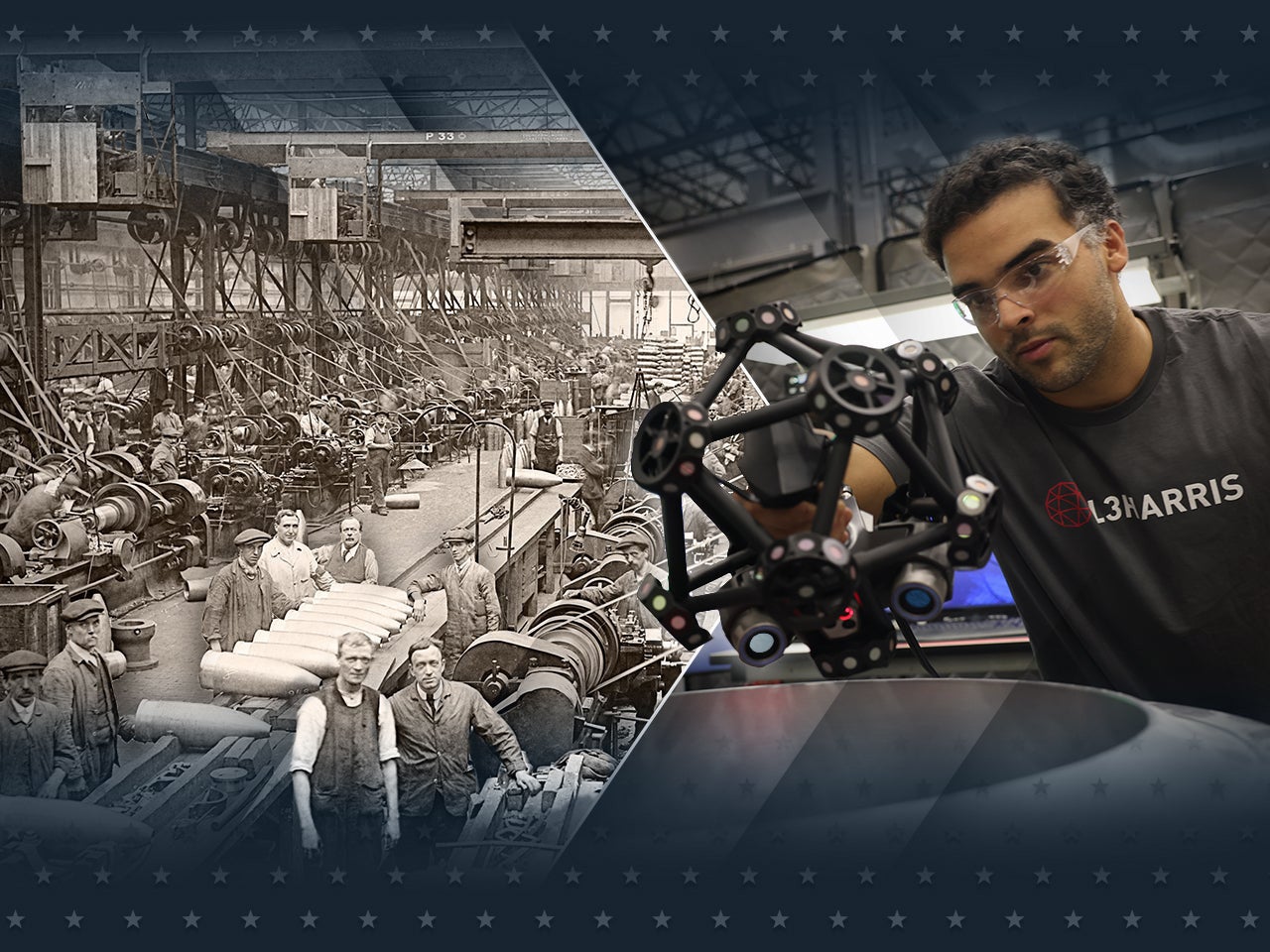
Manufacturing lines shown historical along with modern workstation

From Interchangeable Parts to Mission Readiness at Scale

THEN

American manufacturing innovations such as interchangeable parts and the assembly line changed industry by making production faster, more precise and more scalable. These breakthroughs reduced cost, improved consistency and helped establish the United States as a global industrial leader. They also introduced a new way of thinking: that complex systems could be built efficiently, repeatedly and at scale.

NOW

Today, America’s manufacturing strength depends on more than scale alone. It depends on how fast advanced capabilities can move from production to mission use. L3Harris is contributing to that evolution through “Powder-in, Engine-out™” hypersonic propulsion manufacturingadditive manufacturing for security space assets, and expanded solid rocket motor production that helps support national defense readiness. The result is a modern manufacturing model built not just for efficiency, but for speed, adaptability and strategic impact.

7. Electric Light to Modern Sensing

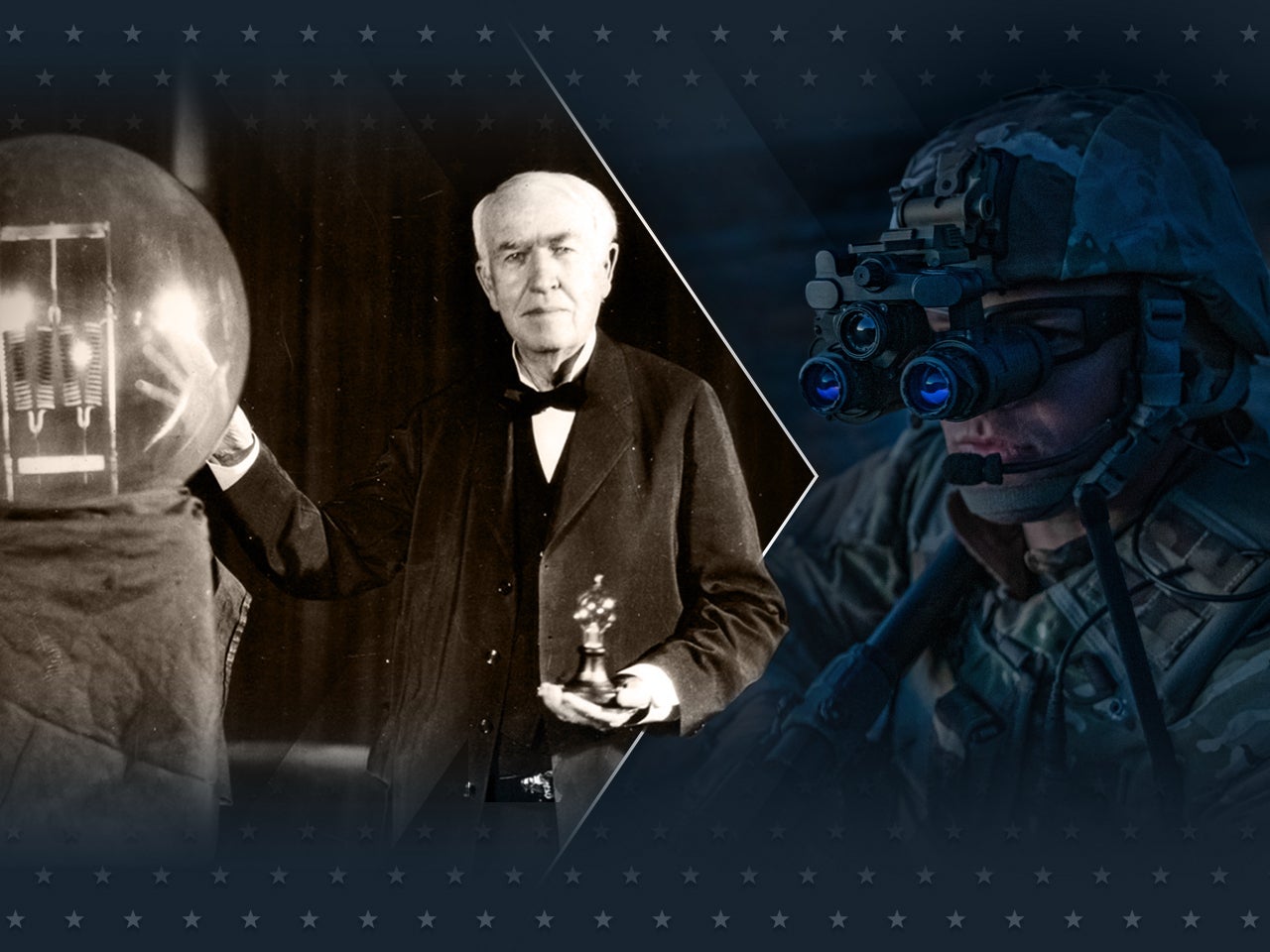
Archive image of Thomas Edison with modern image of soldier with night vision goggles

From Turning on the Light to Illuminating the Mission

THEN

Practical electric lighting transformed modern life by making work, travel, and industry safer and more reliable after dark. It extended productive hours, reshaped cities and demonstrated how a breakthrough in applied science could have sweeping effects across society. The light bulb became a symbol of invention itself, the power to make the unseen visible

NOW

L3Harris carries that legacy forward with night vision technologies like the NOVA™ Binocular System, designed to help users see more, move faster and operate with greater confidence in low-light environments. Built to enhance depth perception, situational awareness and visual clarity, NOVA puts the power of night vision into every soldiers' hands. From illuminating streets and factories to enabling vision in the dark, the goal is still the same: make critical environments easier to navigate and understand.

Celebrating America's 250th

Logos of L3Harris and America250

The story of American innovation is deeply interwoven with L3Harris’ past, present and future. Visit our America250 page to learn more about how our people and technologies helped to usher in new eras in aerospace and defense – and how we’re working to define what’s next.

VISIT AMERICA250 PAGE