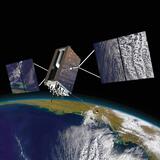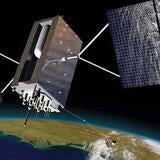
As a pathfinder mission, NTS-3 demonstrates the value of a fully reprogrammable space architecture that provides resiliency against adversaries’ increasing capabilities to deny, jam and spoof GPS.
Developed by L3Harris Technologies in partnership with the Air Force Research Laboratory and Space Systems Command, NTS-3 was designed to evaluate next generation concepts across space, ground and user segments. Over the past 12 months, it has done precisely that, demonstrating resilient, mission relevant capabilities that strengthen the position, navigation and timing (PNT) enterprise and illustrate how future systems can deliver assured performance in increasingly contested environments.
NTS-3 has successfully demonstrated high power signals, agile acquisition aids, flexible navigation message formats and alternate signals that expand mission utility. These outcomes validate the expectations set in 2025 while providing new insight into how these technologies scale to operational architectures.
Further, NTS-3 implemented updates during integration, on the launch pad and on orbit – adding new capabilities, adjusting configurations and enhancing performance without disrupting operations. To illustrate this adaptability, the team demonstrated rapid, on-orbit software adaptability to meet emerging electronic warfare threats. The result speaks for itself: a modular, software defined satellite navigation (SATNAV) architecture.
"NTS-3 represents a fundamental shift in how the industry thinks about satellite navigation – not as a fixed capability but as an evolving and adaptable enterprise," said Nate Krejca, General Manager, Mission Critical RF, L3Harris. "What we’ve proven over the past year changes the conversation about what's possible for the future of PNT."
This level of agility is enabled by L3Harris’ modular payload design and software defined processing framework, which was delivered on a highly accelerated timeline. NTS-3’s fully integrated spacecraft was completed in 44 months, approximately three times faster than comparable programs.
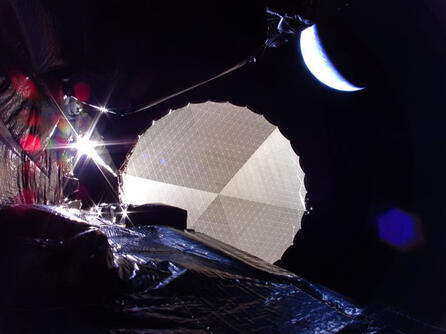
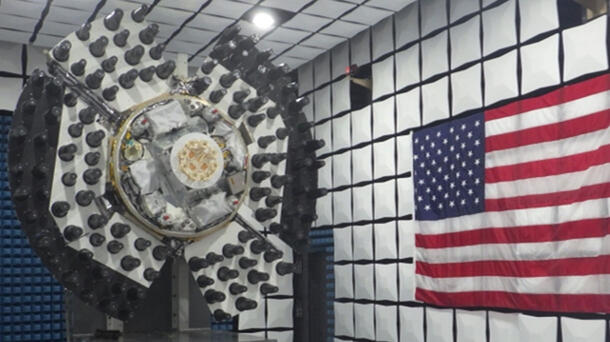
NTS-3’s software-defined payload, modular processor framework and flexible phased-array antenna help inform next-generation architectures while providing pathways for increased resiliency. These elements demonstrate how future space-based PNT can deliver tailored effects, support diverse mission needs and incorporate updates across the satellite’s lifecycle rapidly and at lower cost.
The insights gained from NTS-3 are informing multiple next-generation efforts, including resilient multi-orbit architectures. These lessons help shape how future systems will deliver assured timing and navigation for warfighters and allies and provide decision makers with a clearer understanding of how flexible SATNAV capabilities can mitigate emerging operational risks.
NTS-3’s proven reprogrammability and modular design support broader Department of the Air Force studies into hybrid PNT, proliferated constellations and multi-source navigation frameworks across all orbital regimes.
One year after launch, NTS-3 stands as a pivotal demonstration of what the future of SATNAV can be. As the first enterprise navigation experiment in half a century, it proves that adaptable, reprogrammable, mission-tailored PNT is not only achievable, but also essential. NTS-3 shows the path forward, setting the stage for resilient architectures that will safeguard critical timing and navigation services for decades to come.