Artemis II

About the Mission

From propulsion systems that help launch NASA's Space Launch System (SLS) rocket and guide the Orion spacecraft through deep space, to communications that keep the crew connected with Earth, to avionics that ensure precise navigation and control, L3Harris technology is integral to every phase of the mission.

Mission Type: Crewed Lunar Flyby Test Mission

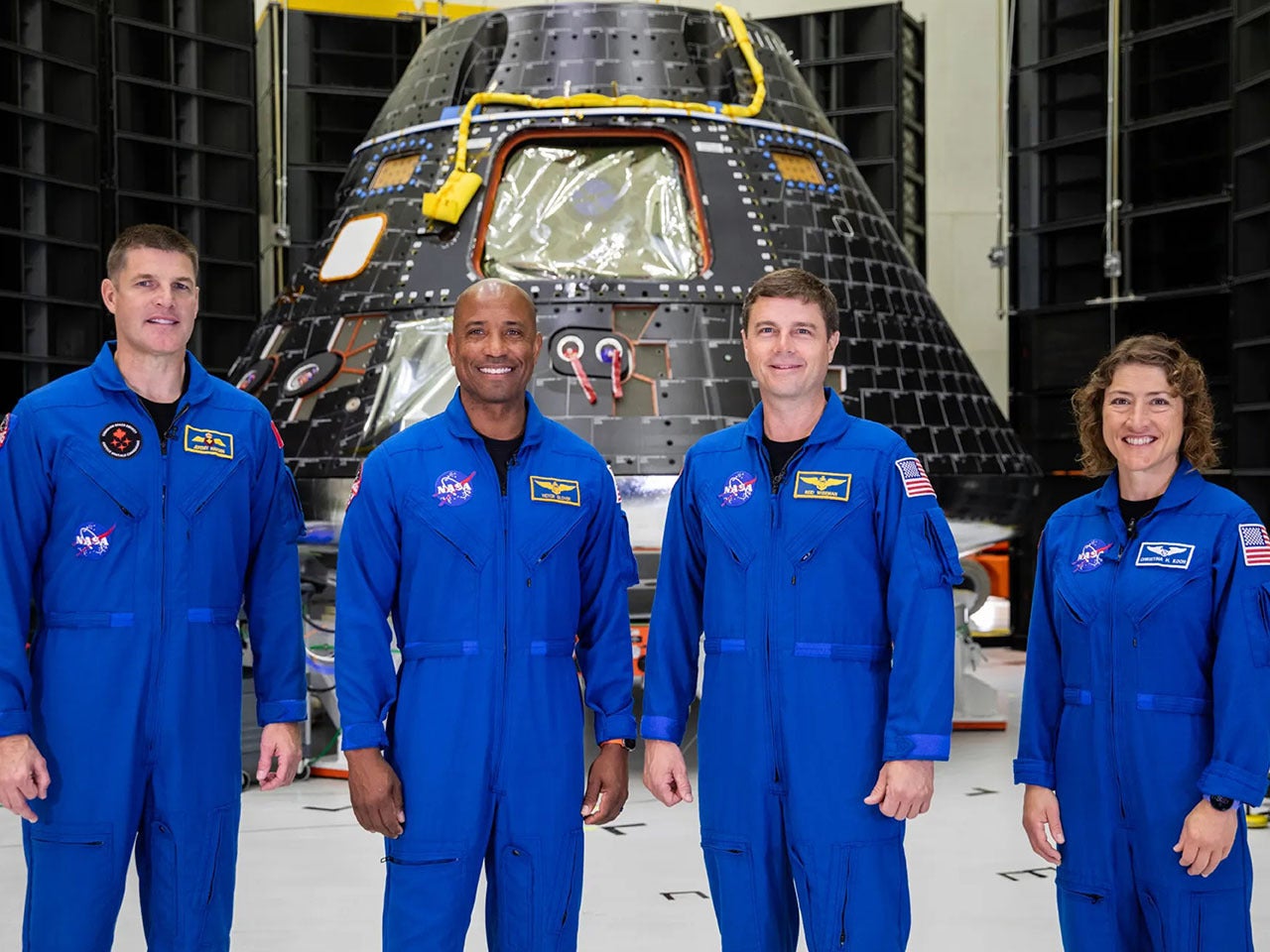
Crew Size: 4 - Commander Reid Wiseman, Pilot Victor Glover, Mission Specialist Christina Koch, and Mission Specialist Jeremy Hansen

Launch Date: No Earlier than Feb. 6, 2026 - NASA Mission Availability Calendar

Mission Duration: 10 Days

L3Harris Contributions: L3Harris Technologies provides 108 mission-critical elements, including propulsion, communications, and avionics.
1st

International astronaut to travel to deep space

4600

Miles crew will fly beyond the Moon

>50

Number of years since humans return to lunar vicinity

Powered By L3Harris

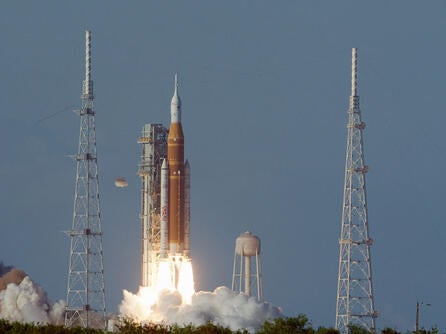
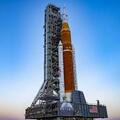
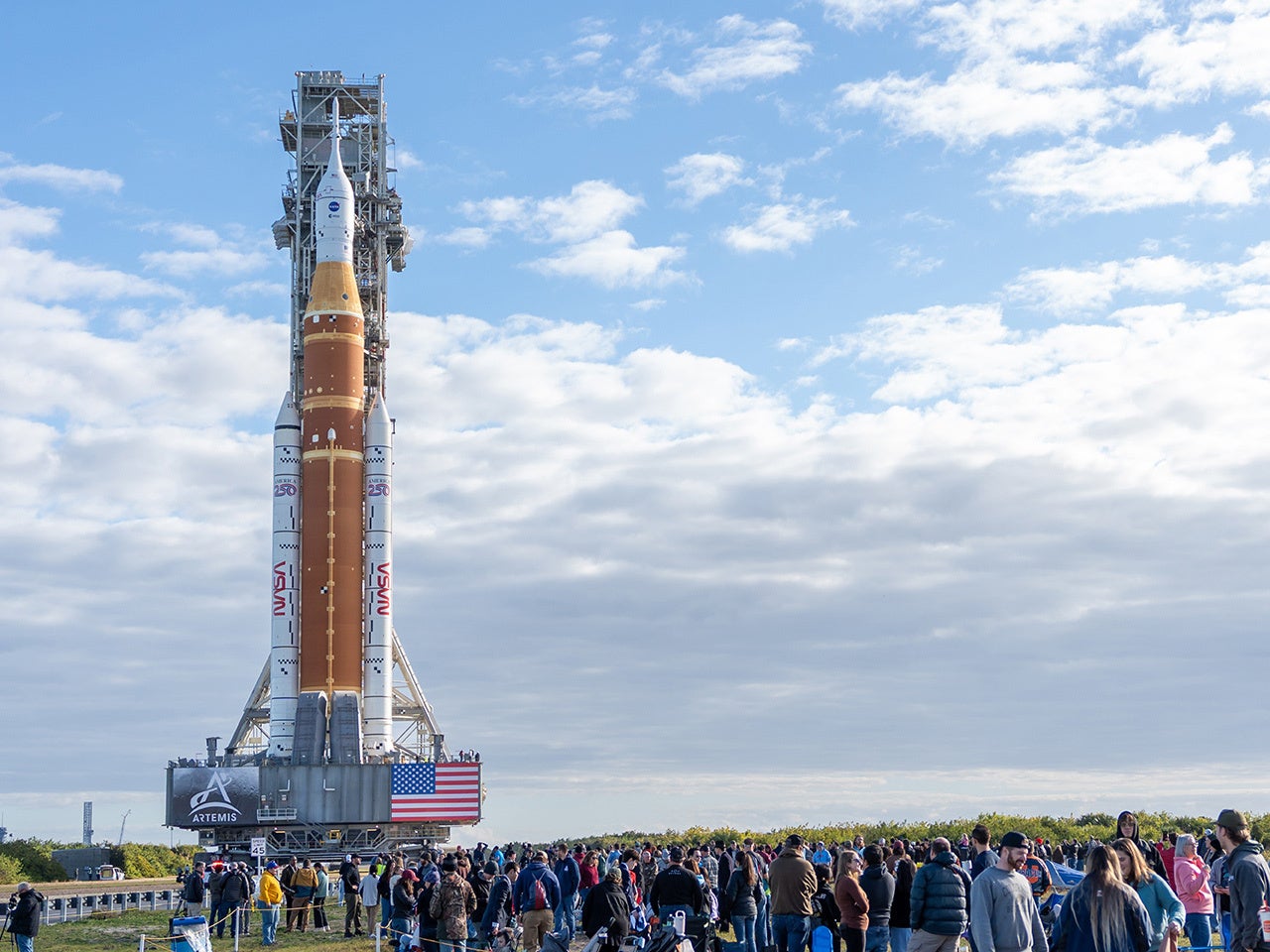
Rolling out SLS for Artemis II

Images Credit: NASA

LAUNCH PHASE:

  • L3Harris-built RS-25 engines power the SLS rocket’s core stage for the first 500 seconds of flight.
  • The Interim Cryogenic Propulsion Stage (ICPS), powered by an L3Harris RL10 engine and controlled by 12 L3Harris MR-106 thrusters, boosts Orion into a high Earth orbit for a proximity operations demonstration.
  • 40 advanced avionics systems precisely control and monitor the SLS core stage, ICPS, and solid rocket boosters, ensuring safe and reliable launch operations.
  • Nine composite overwrapped pressure vessels support the operation of SLS.
  • The L3Harris jettison motor separates the Launch Abort System from the Orion spacecraft to allow astronauts to continue their journey.
  • Each Artemis II crew member is equipped with two small L3Harris emergency oxygen tanks, totaling eight across the crew.
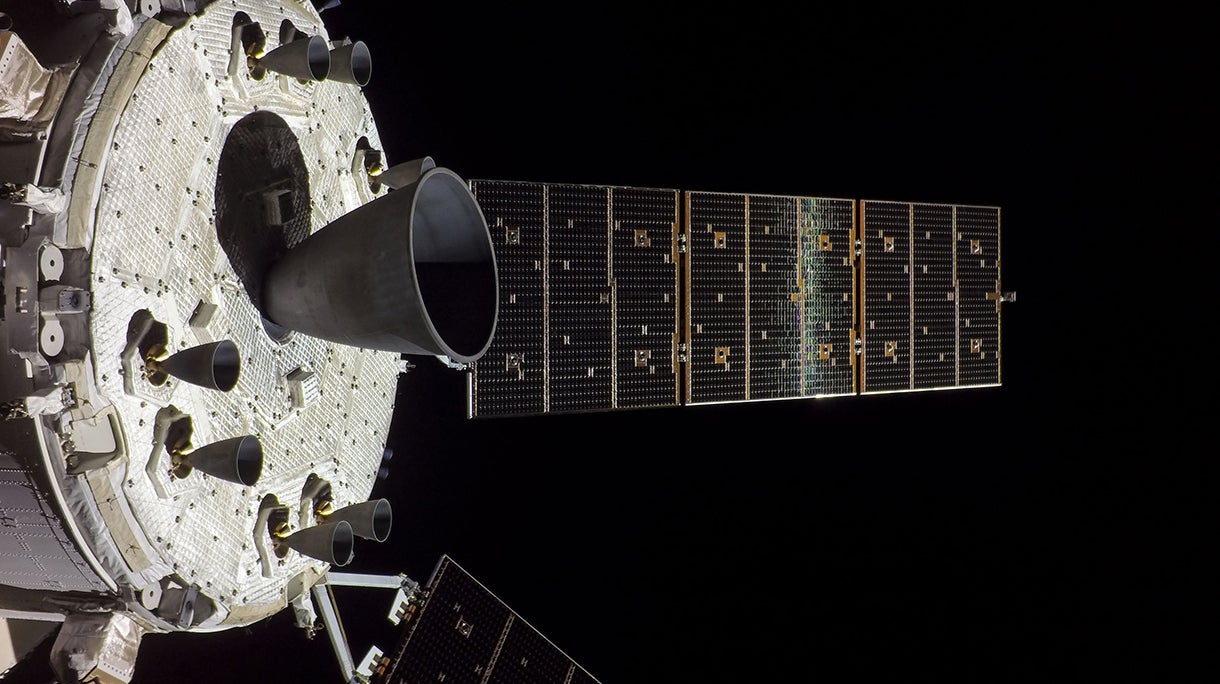
The Orion Main Engine on Orion’s service module is prominently featured in this image from flight day 22 of the Artemis I mission in 2022.

MISSION PHASE:

  • The L3Harris-built Orion Main Engine will perform the critical translunar injection burn, sending the crew on their 10-day mission around the Moon, and will also be fired to escape the Moon’s gravity and return the crew to Earth.
  • L3Harris R-4D-11 thrusters on Orion will execute vital course corrections and maneuvering throughout the mission and serve as backups to the Orion Main Engine.
  • L3Harris’ Orion audio system enables clear, continuous communication between astronauts and mission control.
  • Four composite overwrapped pressure vessels on Orion’s service module provide breathable air to the astronauts inside the spacecraft.
Jeremy Hansen, mission specialist; Victor Glover, pilot; Reid Wiseman, commander; and Christina Hammock Koch, mission specialist

LANDING PHASE:

  • L3Harris MR-104 thrusters will enable precise trajectory adjustments to position Orion’s heatshield properly for re-entry and splashdown, supporting the crew’s safe return to Earth.
  • Upon splashdown, Orion will deploy its self-righting flotation system, which will be inflated with helium stored in five composite overwrapped pressure vessels built by L3Harris.
This is a historic moment, the beginning of a new phase of space exploration. It’s very exciting to be part of that.
- Helen Lewin, L3Harris' RS-25 Launch Support Lead

Featured News

NASA’s Space Launch System rocket carrying the Orion spacecraft launches on the Artemis I flight test, Wednesday, Nov. 16, 2022, from Launch Complex 39B at NASA’s Kennedy Space Center in Florida. Photo credit: NASA.

Editorial | 01. 07. 2026

For L3Harris, the Action Starts Six Seconds Before Artemis II Lifts Off

The RS-25 engines ensure a safe and successful start to NASA’s historic Artemis II crewed mission to the Moon.

NASA’s Space Launch System rocket carrying the Orion spacecraft launches on the Artemis I flight test, Wednesday, Nov. 16, 2022, from Launch Complex 39B at NASA’s Kennedy Space Center in Florida. Photo credit: NASA.

Editorial | 01. 07. 2026

For L3Harris, the Action Starts Six Seconds Before Artemis II Lifts Off

The Orion Main Engine on Orion’s service module is prominently featured in this image from flight day 22 of the Artemis I mission in 2022.

Editorial | 12. 01. 2025

Artemis II: A Mission of Veterans, Firsts and Lunar Dreams

The Orion spacecraft for NASA’s Artemis II mission is stacked on the Space Launch System (SLS) rocket in High Bay 3 of the Vehicle Assembly Building at Kennedy Space Center in Florida.

Editorial | 10. 21. 2025

Orion Meets SLS: L3Harris Technology Ready to go to the Moon

Image for Artemis II Editorial 092223

Editorial | 05. 08. 2025

RS-25 Engines with Different Histories Will Share Common Future on Artemis II

SLS gets integrated

Editorial | 06. 30. 2025

Artemis II Mission Advances with Successful RS-25 Engine Checkout Tests

Resources

  • Artemis II First Crewed Flight to the Moon Since Apollo Infographic

    Artemis II First Crewed Flight to the Moon Since Apollo Infographic

  • Rs-25 Incredible Facts

    RS-25 Incredible Facts

  • RS-25 Propulsion System Data Sheet

    RS-25 Propulsion System Data Sheet

  • RL10 Propulsion System Data Sheet

    RL10 Propulsion System Data Sheet

  • L3Harris' NASA Orion audio system will play a mission-critical role in returning astronauts to the lunar surface as part of the Artemis missions.

    NASA Orion Audio System Data Sheet

  • infographic on l3harris role in artemis

    L3Harris Role on Artemis II Infographic